![[back]](/assets/home_24dp_E3E3E3_FILL0_wght400_GRAD0_opsz24.svg "[back]")
![[search]](/assets/search_24dp_E3E3E3_FILL0_wght400_GRAD0_opsz24.svg "[search]")
Thanasimon and Galene
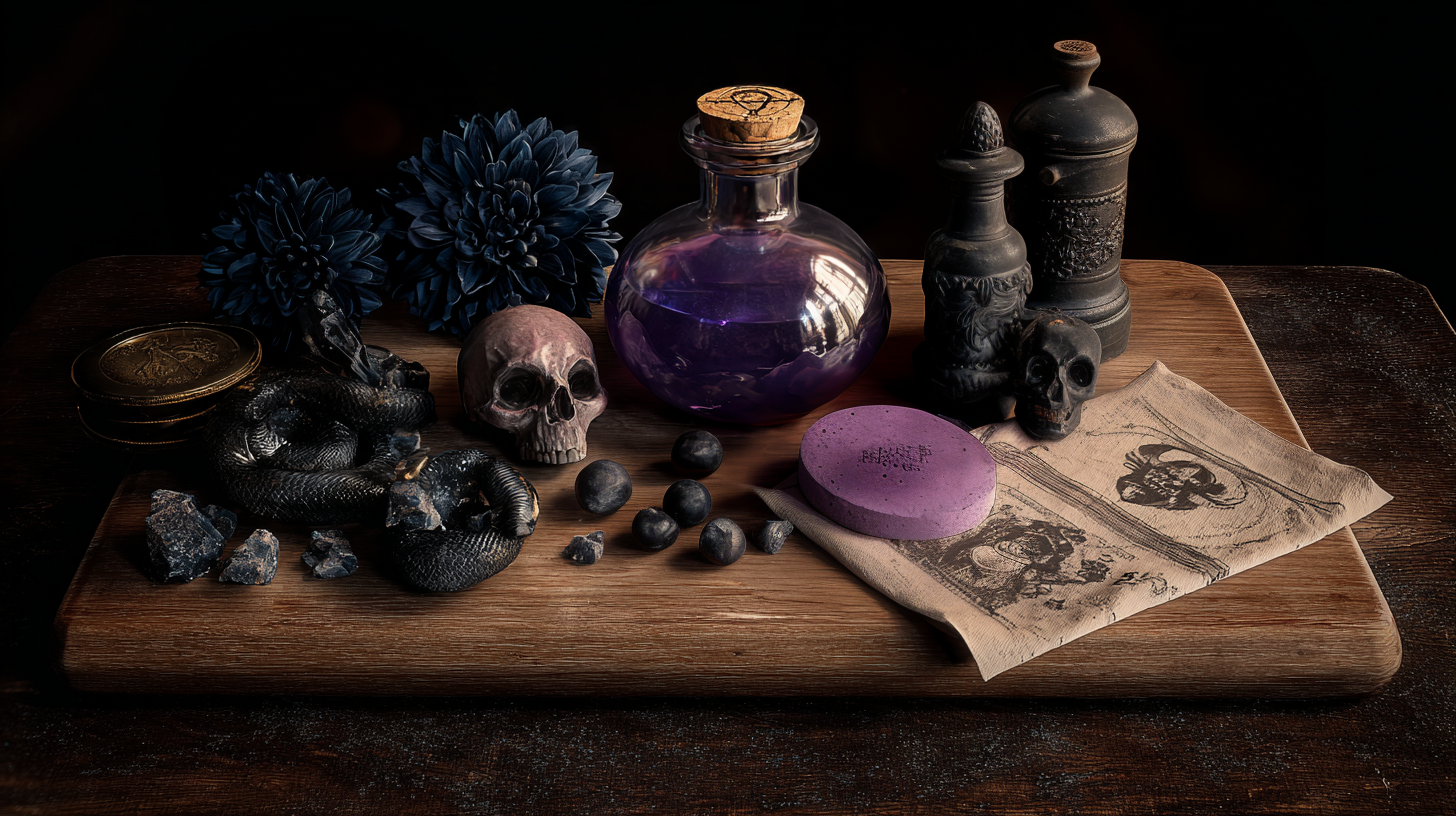
The context of this article is within the historical Hellenic oracular Greek mystery or Orphic-initiatory tradition.
It was guided by ritual, and we dont know everything about it.
- Intro
- Thanasimon and Galene - a dote and antidote practice
- Tradition in Rites
- Pharmacology in the Human
- Psychology of the rite
- Sources
- Word Etymology
- Recipe
- Thanasimon and Galene - deep dive into the sources
- See also - More Reading
Intro
A thanasimon is a "Death Inducer" φάρμακον (pharmakon), sometimes called "the storm". Used within a Mystery rite where a controlled "near death" experience produces a transformative insight in the initiate's understanding of the order / kosmos, changing their inner (self) consciousness and outer (social) consciousness to be more harmonious and less opposed.
- Thanasimon (θανάσιμον), the death-inducer is a venom-based initiation pharmakon - an intentionally lethal compound whose danger is counterbalanced by its antidote,
- Galene (γαλήνη), the antidote to the death-inducer, forming a binary practice central to serpent - based mystery rites.
The Thanasimon system did not treat venom solely as a poison; in controlled doses, Greek physicians and mystery-priests regarded it as a tool for conditioning, endurance, and even visionary states - an idea documented across Nicander, Galen, Aelian, and the PGM.
These rites belonged to priesthoods - often described under serpent imagery such as Drakon or Echidna (δράκων, ἔχιδνα, ὄφις) - who possessed inherited pharmacological knowledge of venoms, antidotes, youth-conditioning, and microdosed toxology. Their authority derived from their technical control over dangerous pharmaka and guidance of the initiate in the Aion to create harmony with their daimones, often encoding their authority into mythic symbolism like the Gorgons and Snake imagery, and the medical Caduceus used in Asclepian healing centers.
The pharmacological power lies not in the venom alone but in the binary two-stage rite: induction into crisis (Thanasimon), and controlled restoration through its antidote Galene. This binary appears centuries before theriac, already fully formed in Asclepian, Hippocratic and Nicandrean toxicology.
- Many new readers assume “death” = metaphorical.
- But here is the opposite: it is literal near-physiological shutdown paired with a pharmacological rescue.
The ‘death’ in this context is physiological, not metaphorical: a controlled collapse of vital signs induced through toxic pharmaka, followed by revival through antidotal galene, forming a literal enactment of the death–rebirth cycle.
Because such compounds were lethally dangerous, their use was restricted to hereditary serpent-priesthoods...
The journey of the initiate is guided by an administrator (e.g. a priestess, or a prophet), into and out of this "death" state, in order to "educate" their consciousness in a guided journey of "death" and "resurrection", where the initiate is "reborn", their Soul/Psyche educated or molded.
To pull the initiate out of the near-death state, and save their life, an antidote called Galene is applied, sometimes called "the calm".
These rites often culminated in induced visions (θεωρίαι), sometimes through medicated salves (kollouria) applied to the eyes or skin, paralleling the PGM instructions to ‘see the gods walking.’
The rite was structured around a deliberate polarity: the Thanasimon as “the storm” (violent upheaval of body and psyche) and the Galene as “the calm” (the re-establishment of order). This binary—ordeal and restoration—was foundational in Greek pharmacology, mystery initiation, and Asclepian healing.
Many ancient testimonies—from Nicander to Aelian to Galen—indicate that such rites often involved initiates in early youth (νεανίσκοι), who were trained or habituated to pharmaka from a young age.
Related:
- How God Formed Man - humans weren't created, but their Soul/Psyche certainly were formed/molded.
- Soul/Psyche - often the target for improvement in rites
- Theriac - compound poly pharmacy contained both the storm and the calm in one, a nice advancement used by Mithradates, Nero, Marcus Auralius (written about by Nicander, Andromachus, Galen)
- On Theriac to Piso - deep dives into Theriac and cultural use
- Kollourion
Thanasimon and Galene - a dote and antidote practice
The older Greek pharmacological horizon already operated with a binary contrast between θανάσιμον (thanasimon) and γαλήνη (galene) — the death-bearing and the calming.
Against these stood the agents of γαλήνη (galene), restoring bodily and psychic stillness:
So, Before theriac (θηριακή) emerges as the master panacea drug, Greek pharmacology operated with a binary pattern:
- Thanasimon (the storm: death inducer), and...
- Galene (the calm: antidote)
Sounds harsh to "induce death" on purpose, why?
Because near death experience (NDE) is associated (today) with causing a mystical experience, and mystical experience has the power to heal the soul and psyche through a unity mindset experienced during the time.
It was harsh by design: a technology to induce NDE for the purpose of molding a better person. NDE is very risky. So having a technology to control such an experience while minimizing harm, is ideal.
Healing through education of the soul and psyche was thought to heal the body, for a time, at Asclepian medical centers. Which was basis of Asclepian medicine until Galen started pruning the Hippocratic corpus of its less science-based material.
- Thanasimon
- Galene (γαλήνη)
- From γαλήνη (galene), calm, stillness
- The class of antidotes, soothing pharmaka, cooling agents, binding aromatics
- Used to counterbalance the thanasimon (death inducing venoms)
In ancient medicine and rites, human beings were exposed, so they could fill the role of soteria (savior) during initiation rites. Using a bandage around cuts on their arms, or thin tissues.
Tradition in Rites
Thanasimon comes from Hellenic mystery and Orphic-initiatory tradition
- The ritual framework evolved over centuries, blending classical Orphic, Dionysian, and Pythagorean elements with later Hellenistic mystery cult practices.
- Conducted by: a specialized priesthood, often referred to in Orphic or “Echidnaic” terms as Drakon / Echidna, functioning as temple guardians, ritual guides, and administrators of the pharmaka. These priests guided the initiate through the near-death experience and applied antidotes such as Galene to safely restore consciousness.
The structure of the rite consistently features:
- Induction via Thanasimon (death-inducing pharmakon) to produce a controlled “death” state.
- Mystical or revelatory experience—the initiate perceives both inner and outer order.
- Rescue and resurrection by antidote (Galene), mediated by the priesthood, culminating in initiation and rebirth.
- see Breakdown of the Mystery for detailed walkthrough of a rite using thonasimon and galene, from Dr Hillman.
Within the historical Hellenic and Orphic context, death-and-resurrection rites involving pharmaka like the Thanasimon were carried out primarily by specialized mystery cults, with a few identifiable groups or priesthood roles:
1. Orphic Mysteries
- Role: Orphic priests and priestesses, sometimes referred to as Drakon / Echidna, guided initiates through ritualized near-death states.
- Practice: Initiates were ritually “killed” and “reborn” symbolically, often with pharmaka applied to induce altered states.
- Purpose: Purification, insight into cosmic order, mastery of the self, and ethical/religious education.
- Attestation: Indirectly in Orphic fragments, later commentaries, and references to pharmaka in mystical contexts.
2. Dionysian/Bacchic Mystery Cults
- Role: Priests of Dionysus or Bacchus oversaw ecstatic, trance-like experiences.
- Practice: Used intoxicants or pharmaka (sometimes derived from plants, venom, or combination compounds) to induce visionary or death-like states.
- Purpose: Achieve transcendence, divine communion, or insight into life, death, and cosmic cycles.
- Attestation: Literary allusions in Euripides (Bacchae), Plutarch, and some magical papyri referencing Dionysian pharmacology.
3. Pythagorean or Orphic-Initiatory Hybrids (Hellenistic)
- Role: Philosophically oriented cults blending Orphic, Pythagorean, and Hellenistic Egyptian elements.
- Practice: Use of “storm” pharmaka to produce ego-death experiences, often guided by a trained priesthood.
- Purpose: Cultivation of ethical self-mastery, perception of kosmos, and unity of soul with divine order.
- Attestation: Later Hellenistic sources, magical papyri, and Galenic or Dioscoridean pharmacology indirectly suggest these rites.
4. Early Christian “Mystery Rite” Syncretism
- Role: Prophets such as those Christian/Baptists (under Jesus or John) appear to have utilized pharmaka-based initiation, especially in the context of youth disciples (νεανίσκοι) and healing/venom-based preparations.
- Practice: Analogous “death and resurrection” experiences, possibly drug-assisted, leading to visionary insight.
- Purpose: Mystical union, revelation of divine truths, or preparation for teaching others.
- Attestation: Allusions in texts like Acta Thomae, Origen’s writings, and later Christian commentary on pharmaka use in ritual context.
Summary:
- These rites were never casual or universal; they were strictly controlled by specialized, trained priesthoods.
- The pharmakon (Thanasimon or equivalent) was ritually applied under guidance to produce controlled near-death experiences.
- Evidence is mostly indirect, drawn from pharmacological texts (Galen, Dioscorides), Orphic fragments, magical papyri, and mystical writings.
Pharmacology in the Human
Within mystery / Orphic-initiatory contexts, the Thanasimon is:
- A φάρμακον (pharmakon) that is “deadly” in nature
- Applied as a chrism / ointment (cf. ἀλείφω, χρίω) to soft tissues (skin, nostrils, eyes, mouth, face, genitals, etc).
- Causes a physical descent into near-death state causing mental hallucinatory psychosis and ego death, progression to coma, and then (if antidote isn't received in time) actual death.
- Requires an antidote Galene for the venoms to 'save' the initiate from actual death.
- Process of thanasimon + guidance + galene creates the pathway to rebirth by inducing insight through a unity rebirth experience, through an ego death like mechanism, and realization or release from fear.
Psychology of the rite
Guidance is key. Especially to ensure repeatability. The rite aims to synchronize the initiate to the right mental mindset to guide them to the intended outcome.
We know that from the Eleusinian mysteries, that mental imagery was a journey to the underworld and return from it (death and resurrection is a common theme). Centered around the story of Persephone and Hades. Persephone the parthenos virgin/maiden travels to the underworld, marries Hades, becomes Queen of the underworld, and comes back to the living world as a new person.
The guidance of the rite creates this imagery in a pliable mind, which aligns it's revelation to some constraints.
The goals are similar to modern psychedelic-assisted therapy (analogy, not literal equivalence). But more aligned with releasing fears through realization that we are all one and that we are the leader of our "self", and our leadership relationship with others is best done constructively than adversarially (self-mastery, ethical responsibility, and social harmony all emerges here). Roughly...
Sources
Direct descriptions of Thanasimon are rare; most sources are indirect pharmacological or magical references.Thanasimon is primarily reconstructed from textual and pharmacological sources; no full ritual manuals survive, so our understanding relies on cross-referencing Galenic, Dioscoridean, Orphic, and magical papyri evidence.
Medical
Galen
ΓΑΛΗΝΟΥ ΠΕΡΙ ΑΝΤΙΔΟΤΩΝ p154
Ed. Chart. XIII. [911. 912.]
Ed. Baf. II. (447.)
ἐπίτασιν τοῦ φαρμάκου, ἕνεκα τῆς τῶν ἐμμήνων ἐποχῆς, καὶ τῶν συλλημ [912] μάτων, ὥστε ἀκινδύνως φέρεσθαι, δικτάμνου Κρητικού < δ. αμμωνιακού < γ'. πηγάνου αγρίου σπέρματος < γ'. κυμίνου Αιθιοπικοῦ στ'. τριφύλλου σπέρ ματος δ. βουνιάδος ἀγρίας δ. χαμαίδρυος < δ' ῥᾷ Ποντ τικοῦ γ. ὁποῦ Κυρηναϊκού < β. τούτων προσβαλλομένων ἡ τοῦ φαρμάκου χρῆσις γίνεται πρὸς πολλὰ χρήσιμος φθεί ρει γὰρ τετραμηνιαῖα, καὶ τριμηνιαία κατάγει.
[ Μιθριδάτου θηριακή.] Ταύτη ὁ βασιλεὺς Μιθριδάτης ἀεὶ ἐχρῆτο προφυλακῆς χάριν θανασίμου, ἡνίκα γοῦν ὑπὸ ̔Ρωμαίων ἑάλω, δὶς πιων θανάσιμον, καὶ μὴ δυνηθεὶς ἀποθανεῖν, ξίφει ἑαυτὸν διεχρήσατο. πρὸς τὰ θανάσιμα, δὲ τῶν φαρμάκων ποιεῖ, καὶ παντὸς ἰοβόλου πληγὴν, καὶ πρὸς τὰς τῶν ἐντὸς διαθέσεις. ταύτῃ ἐχρήσατο ὁ ̓Ανδρόμαχος. τὰ δὲ τῆς σκευασίας ἔχει οὕτως. 2 Αρτίσκων σκιλλητικών < μή. θηριακῶν ἀρτίσκων, πεπέρεως μέλανος, ἡδυχρόου μάγματος, όπου μήκωνος Σπανοῦ, ἀνὰ < κδ'. ῥόδων ξη ρῶν, σκορδίου, σπέρματος βουνιάδος, ἴρεως Ἰλλυρικῆς,
An intensification of the pharmakon, because of the interruption of the monthly courses and of conceptions, so that it may be borne without danger.of Cretan dittany, four;
of ammoniacum, three;
of wild rue seed, three;
of Ethiopian cumin, six;
of clover seed, four;
of wild bunias, four;
of chamaedrys, four;
of Pontic rhus, three;
of Cyrenaic juice, two.When these are added, the use of the pharmakon becomes useful for many things; for it destroys four-month pregnancies and brings down three-month pregnancies.
Theriac of Mithridates.
By this King Mithridates always used for the sake of protection against a θανασιμον/thanasimon death-inducer. When indeed he was captured by the Romans, having twice drunk a death-inducer and not being able to die, he used a sword upon himself.
It works against the θανασιμον/thanasimon (death-inducing) pharmaka, and every ios (venom) arrow-poison casting strike, and the internal disorders.
This was used by Andromachus. The preparation is as follows:
of squill cakes, forty-eight;
of theriac cakes, black pepper, sweet-spice compound, and juice of Spanish poppy, twenty-four of each;
of dried roses, skordion, seed of bunias, and Illyrian iris...
Classical
Euripides Medea
ἐκ τῶν δὲ πρώτων πρῶτον ἄρξομαι λέγειν·
ἔσωσά σ᾽, ὡς ἴσασιν Ἑλλήνων ὅσοι
ταὐτὸν συνεισέβησαν Ἀργῷον σκάφος,
πεμφθέντα ταύρων πυρπνόων ἐπιστάτην
ζεύγλαισι καὶ σπεροῦντα θανάσιμον γύην·
But from the beginning I shall begin with the first thing:
I saved you, as all the Greeks know who boarded the Argo with you,
when you were sent to become master of the fire-breathing bulls,
to yoke them beneath the harness,
and to sow the death-inducing field.
And right after that:
σπείραις ἐφρούρει νύκτ᾽ ὕπνῳ τ᾽ οὐχ ὑπνώσσων,
κτείνασ᾽ ἀνέσχον σοὶ φάος σωτήριον.
and the dragoness, who, encircling the all-golden fleece,
guarded it with his coils through the night, not yielding to sleep,
having slain him, I raised up for you the salvific light.
Slay the dragon, get the fleece, get salvific light.
Taken literally, this doesn't quite compute.
Take metaphorically, given what we know about Medea, Echidnaic Priesthood, and mystical schools:
- Jason enters a death-producing transformative domain and plants the seeds of a process that will generate conflict, death, and saving transformation."
That fits the myth perfectly.
- The dragon’s teeth become the initiating principle.
- The field becomes the place of transformation.
- The resulting warriors become manifestations of the process that was seeded.
That γύη remains “field,” but the field itself is a metaphorical mental state in which a death-inducing transformation is seeded.
Where is the teeth? The reader fills in the dragon teeth detail because the Argonaut myth is famous. The actual dragon’s teeth episode is told elsewhere in the Argonaut tradition. For example, in Argonautica, Aeëtes gives Jason a task:
- Yoke the fire-breathing bulls.
- Plough the field of Ares.
- Sow the teeth of a serpent/dragon.
- Armed warriors spring from the earth.
Apollonius explicitly mentions the teeth. Euripides does not.
He simply references the entire episode by naming two parts everyone would recognize:
- fire-breathing bulls
- death-bringing field.
In fact, that’s one reason the phrase θανάσιμον γύην stands out. Euripides could have said something like:
- “sowing the serpent’s teeth”
- “the death-bringing field.”
So if you’re doing close reading, the text is not drawing attention to the teeth. It is drawing attention to the field and its death-inducing character.
The teeth belong to the larger myth that Euripides expects the audience to supply from memory. The word for teeth (ὀδόντες) does not appear in this passage.
Euripides Ion
ὅσας σφαγὰς δὴ φαρμάκων τε θανασίμων
γυναῖκες ηὗρον ἀνδράσιν διαφθοράς
How many ritual-killings and destructive means of death-inducing pharmaka women have discovered against men.
Josephus
Josephus talks about thanasimon (θανάσιμον) death bringing pharmakon (Φάρμακον), demonizing the thanasimon (death-inducer) practice. Seemingly not understanding the historical context himself (or simply referring to mundane poisoning).ψυχὴν ἀντὶ ψυχῆς καταθέσθαι δικαιοῦντος τοῦ νόμου.
(279) Φάρμακον μήτε θανάσιμον μήτε τῶν εἰς ἄλλας βλάβας
πεποιημένων Ἰσραηλιτῶν ἐχέτω μηδὲ εἷς· ἐὰν δὲ κεκτημένος φωραθῇ
τεθνάτω, τοῦτο πάσχων ὃ διέθηκεν ἂν ἐκείνους καθ’ ὧν τὸ φάρ-
μακον ἦν παρεσκευασμένον.
No one shall possess a drug (Φάρμακον/pharmakon), neither death-inducing (θανάσιμον/thanasimon) nor one prepared for other kinds of harm against Israelites. And if anyone is discovered to be in possession of it, let him be put to death, suffering this very thing which he had prescribed for those against whom the drug had been prepared.
Others (todo: pull more sources into here.... ....)
- Magical Papyri (PGM) — certain “death-inducing” elixirs or phylacteries hint at ritual poisons. Formulas for visionary experiences; guidance paired with pharmaka.
- Galen, De simplicium medicamentorum temperamentis — mentions potent venoms, poisonous plants, and theriac compounds (e.g., Echidna venom combinations), lethal compounds used medicinally or ritually; some compounds are interpreted by scholars as analogous to Thanasimon.
- Dioscorides, De Materia Medica — catalogues lethal herbs and compounds, sometimes used in Orphic-mystery contexts. Including nightshade, hemlock, and other “death-inducing” substances
- Origen, Philocalia — discusses “echidnai” and pharmakon (φαρμάκων) that act on human forces in guided rituals, linked to Thanasimon preparations. Pharmakon that weakens inner opposing forces (fears) or shields (your inner guards) within us.
- Acta Thomae — references to “pharmaka counteracting pharmaka” and viper venoms in ritual pharmaka use.
- Orphic fragments / scholia — indirect references to lethal or trance-inducing substances in initiation rites.
Biblical
δαιμόνια ἐκβαλοῦσιν, γλώσσαις λαλήσουσιν καιναῖς,
18. καὶ ἐν ταῖς χερσὶν ὄφεις ἀροῦσιν· καὶ ἐὰν θανάσιμον τι πίωσιν, οὐ μὴ αὐτοὺς βλάψῃ· ἐπὶ ἀρρώστους χεῖρας ἐπιθήσουσιν, καὶ καλῶς ἔξουσιν.
18. They will pick up serpents (ὄφεις/ophis); and if they drink the death inducer (θανάσιμον/thanasimon), it will not hurt them; they will lay hands on the sick, and they will recover."
The term θανάσιμον (thanasimon) appears in Mark 16:18 in the Greek New Testament, where it is translated as "death inducing", which means "deadly" or "poisonous." In this context, it refers specifically to serpent venoms that could cause death. And they're talking about immunity to those venoms, curiously enough.
And how do we get immunity to venoms?
- through antivenoms
- habituation to venoms (via slow introduction to the body, which is used for animal based antivenom serum manufacture today)
Venoms were a potent pharmakon in antiquity, one of the 3 saviors of ancient antiquity (herbal, mineral, and beastly venoms).
- Asclepian healing centers >300 of them, were based on serpent healing practice with sacred rites.
Word Etymology
From LSJ Lexicon
A.deadly, fatal, Hp.Aph.2.1, Pl.R.610e, etc.; “τύχαι” A.Ag.1276; “πέσημα” S.Aj.1033; “χείρωμα” Id.OT560; “πέπλος” Id.Tr.758; “φάρμακα” E.Ion616, Ph.Bel.103.31, cf. Metrod.53, etc.; θηρία θ., of poisonous reptiles, Plb.1.56.4: θανάσιμα, τά, poisons, Ev.Marc. 16.18, Dsc.4.108, Gal.14.154. Adv. -μως, τύπτειν to strike with deadly blow, Antipho 4.3.4: neut. pl. as Adv., “ἀσπίδες -μα δάκνουσαι” D.S.1.87.
2. belonging to death, θ. αἷμα the life-blood, A. Ag.1019 (lyr.); μέλψασα θ. γόον having sung her death-song, ib.1445; “θ. ἐκπνοαί” E.Hipp.1438.II. of persons, near death, S.Ph.819; “θ. ἤδη ὄντα” Pl.R.408b; liable to the death-penalty, Abh.Berl.Akad. 1925(5).21 (Cyrene).2. dead, S.Aj.517; “θ. βεβηκότα” Id.OT959.
From Heyschius (5th or 6th century CE)
ὅ τε θεός· καὶ ὃ πάσχομεν, τέλος ἔχοντος τοῦ βίου. ὁ χωρισμὸς τῆς ψυχῆς ἀπὸ τοῦ σώματος. καὶ ὁ σωματοειδὴς θεός. καὶ ἡ δυσωδία*
<θανατῶν>
θανάτου ἐπιθυμῶν (Ios. b. Iud. 3,208) ASvg
=> No direct entry for θανάσιμον (thanasimon) in Heyschius.
1. Root 1: θανά- (thana-)
- Comes from θάνατος (thanatos) → “death.”
- Proto-Indo-European root: *dheu̯- meaning “to die, perish.”
- So θανά- contributes the semantic field of “death,” “mortal danger,” or “fatality.”
2. Root 2: -σιμον (-simon)
- Likely from the adjective-forming suffix -σιμον or -σιμος (-simos).
- In Greek, -σιμος often gives “capable of” or “apt to” when attached to a verb or noun root.
-σιμον would indicate “capable of causing,” so combined with θανά- it literally means: “death inducer”
- θανάσιμον φάρμακον (thanasimon pharmakon) (a death-inducing drug).
Spellings
- θανασίμον (thanasimon) — standard, medical, Dioscorides/Galen.
- θῶνασίμον (thōnasimon) — magical/mystery spelling (PGM, glosses).
- θῶναξιμον (thōnaximon) — rare corrupt variant (Hesychius, magical lexica).
- θῶνᾶσιμα — plural adjectival form (papyrus charms).
Recipe
1. Pharmacological authors (Galen, Dioscorides, Oribasius, Aëtius, Paul of Aegina)
- Galen and Dioscorides give us the building blocks rather than a single “Thōnasimon recipe.”
- Dioscorides, De Materia Medica (1st c. CE): lists purple preparations with πορφύρα (Tyrian purple, murex secretion), resins (myrrh, frankincense), and animal venoms (snake, scorpion) that were stabilized into ointments with oil, wax, or fat.
- Galen, De Simplicium Medicamentorum (late 2nd c.): repeatedly describes theriac-like poly-pharmaka: mixtures of vipers, opium, aromatic resins, and wine. His pharmacological language overlaps with what we know of “Thōnasimon”: venoms neutralized by theriake, salves applied as chrismata.
- Later compilers like Oribasius (4th c.) and Aëtius of Amida (6th c.) preserve detailed theriac recipes, with dozens of ingredients including viper flesh. These could easily overlap with a thōnasimon preparation.
Thanasimon and Galene - deep dive into the sources
TLG gives ~287 hits for θανάσιμα
Lexicon
Thanasimos: θανάσιμος, -ον — bringing death, mortal, deadly, esp. of φάρμακα, ἰοὶ (poisons, venoms).
Galene: γαλήνη — calm (esp. sea); metaphorically calmness, serenity of the body or soul.
Medical
Other
See also - More Reading
- Kollourion
- How God Formed Man - humans weren't created, but their Soul/Psyche certainly were formed/molded.
- On Theriac to Piso - deep dives into Theriac and cultural use
- Soul/Psyche - often the target for improvement in rites
- Theriac - compound poly pharmacy contained both the storm and the calm in one, a nice advancement used by Mithradates, Nero, Marcus Auralius (written about by Nicander, Andromachus, Galen)
also:
- Medea and Medusa and the Echidnaic Priesthood
- Snakes in the ancient world, what was so special about them?
- Pharmakon in the ancient world, including Thanasimon and Theriac and The Purple
- Letters of Ignatius to the Trallians - talks about drinking the thanasimon pharmakon for the purpose of death