![[back]](/assets/home_24dp_E3E3E3_FILL0_wght400_GRAD0_opsz24.svg "[back]")
![[search]](/assets/search_24dp_E3E3E3_FILL0_wght400_GRAD0_opsz24.svg "[search]")
Asclepius
"The Famous 'Cure' of the Ancient World"
Forestier, A. (Amédée), d. 1930 (Artist)
Caton, Richard, 1842-1926 (Originator)
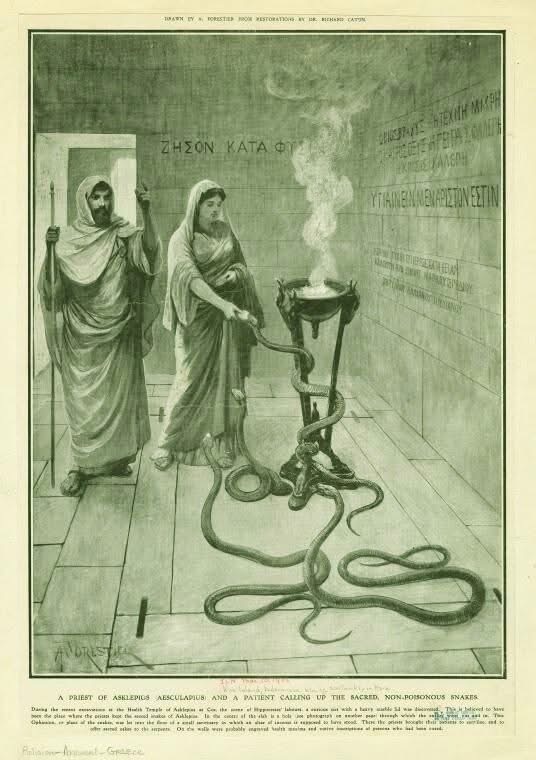
A priest of Asklepios and patient calling up the sacred snakes. (1906)
Illustrated London News
Link to New York Public Library
Content: "During the recent excavations of the Health Temple of Asklepios at Kos, the scene of Hippocrates' labours, a curious cist with a heavy marble lid was discovered. This is believed to have been the place where the priests kept the sacred snakes of Asklepios. In the center of the slab is a hole (see photograph on another page) through which the snakes went out and in. This Ophiseion, or place of the snakes, was let into the floor of a small sanctuary in which an altar of incense is supposed to have stood. There the priests brought their patients to sacrifice, and to offer sacred cakes to the serpents. On the walls were probably engraved health maxims and votive inscriptions of persons who had been cured."--printed on border.
Source Identifier: iln (Hades Legacy Identifier / Struc ID)
Statement Of Responsibility: "Drawn by A. Forestier from restorations by Dr. Richard Caton."--printed on border.
- Introduction
- Ancestry
- Timeline
- About Asclepius
- Chiron the Teacher
- Asclepius is a Savior / Soter
- Parallels to Modern Psychedelic Therapy
- In Detail
- Non Venomous Snakes - not so fast
- 3 Phases of Archinos healing
- Incubation
- The End
- At Kos
- Sources
- See Also
Introduction
In ancient rites, as seen in the >300 Asclepian healing centers of antiquity (700 BCE – c. 400 CE ≈ 1,100 years of continuous activity), they had scripts to guide the patients, using hymns and music, theatrical and choral techniques.
In fact, our modern comedy/tragedy, theater, chorus, comes from these ancient healing practices. Call it "rite" or call it "therapy", the important difference seems to be in the guidance and intention.
Asclepius was a Soter (Savior), first known attestation in Homer's Illiad (750-700BCE) as a man, lived in 1300-1250BCE, around the same time of Hecate and Medea.
Ancestry
Previous practice to Asclepius, may have come from Medea's 1300-1200BCE Echidnaic Drakaina priesthood from Colchis, Scythian/Amazonian venom use for arrow poisons / midwifery / mysticism, and Threshing Floors which evolved into temples with theatrical rites.
Asclepius learned under the Centaur Chiron, along with heros like Heracles. And seemed to be a male branch of the Echidnaic Pharmakon rites, Heracles is fabled to have fought the Drakon, Ophis, and Hydra... all forms of the Drakaina - which tells us the serpent traditions existed before, and seemed to be men fighting or learning that tradition...
Timeline
| Period | Status |
| 1300-1250 BCE | Traditional lifetime of Asclepius (mythic chronology) |
| 750-700 BCE | Earliest surviving literary attestation |
| 600 BCE | Earliest major archaeological Asclepieia emerge |
| 500BCE-300CE | Golden age of healing sanctuaries |
| 300-500 CE | Continued operation under Roman Empire |
| 400-500 CE | Most sanctuaries closed, converted, or abandoned |
About Asclepius
Homers Iliad (ca 900 B.C.) speaks of Asklepios as a warrior-king with immense knowledge of medicine contributing forty ships and men lead by his two sons to the Trojan War. These two sons Machaon and Podaleirios were also knowledgeable in the healing arts.
By the time of Hesiod, two centuries after Homer around 700B.C., Asklepios was considered the principal god of healing.
Hesiod's versions of Asklepios's birth and elevation have remained the best known.
Koronis, daughter of a king in Thessaly, succumbed to the sun-god Apollo, but while pregnant with the god's child she married Ischys.
Apollo killed Ischys, while his sister Artemis slew Koronis. Before her body was burned on the funeral pyre, Apollo snatched the baby Asklepios by "caesarean section".
He brought him to the mountain retreat of a shepherd who raised the child and gave it later to the centaur Chiron in the mount Pelion of Thessaly as a student. Chiron taught him all there was to know about the healing arts, especially in regard to plants and medicine.
When Asklepios grew to manhood he had become so skillful that he even brought dead men back to life. After the complains of the god of the afterworld Plutons, fearing that the afterworld would be depopulated if Asklepios continued to resurrect people, Zeus brother and chief Olympian god struck down the healer with a thunderbolt. Asklepios as a son of an immortal god was brought into the heavens as a deity.
Chiron the Teacher
Asclepius is a Savior / Soter
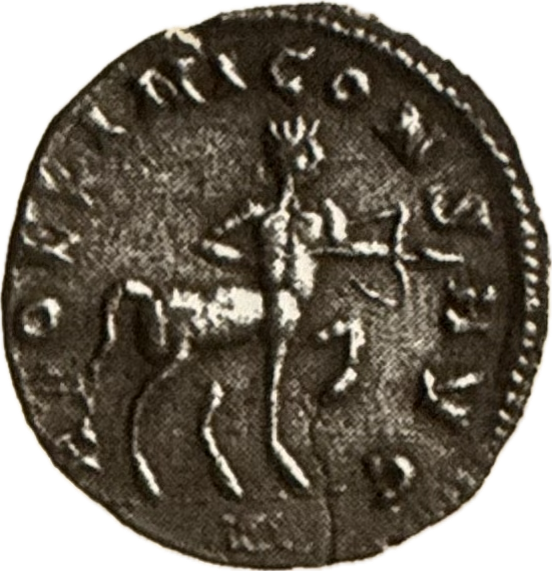
Asclepius was a Savior/Sotera.
A particularly clean inscription from Leptis Magna reads:
[Ἀσκ]ληπιῷ σωτῆρι
Μ(ᾶρκος) Ἰο[—]νς ἀρχιερεὺς α[ὐ]τοῦ
To Asclepius the Savior/Deliverer,
Marcus Io[…]s, his high-priest [dedicated this].”
The inscription is catalogued as IRT 265, and the database explicitly identifies Σωτήρ as Asclepius’ onomastic attribute.
There are multiple other attestations. The epigraphic indexes list Ἀσκληπιός — Σωτήρ at Athens and elsewhere, including formulations such as:
Ἀσκληπιῷ Θ[εῷ] Σωτῆρι
To Asclepius, Theos, Savior.
τῷ σωτῆρι Ἀσκληπιῷ σῶστρα καὶ χαριστήρια
Νικομήδης ὁ ἰατρός
To Asclepius the Savior, offerings for deliverance and thank-offerings, [from] Nikomedes the physician.
At Pentelikon, ca. 200 CE, IG II³ 4, 901 restores a dedication:
To Asclepius Savior and Hygieia and Telesphoros…”
Σωτῆρι Ἀσκληπιῷ
To Asclepius Savior
EDH HD036921
Τὸν σωτῆρα Ἀσκληπιόν …
Asclepius the Savior…
And LSJ’s evidence for σωτήρ specifically includes Asclepius: IG IV 718 (Hermione), IG VII 2808 (Hyettos), and later literary examples.
Asclepius as Σωτήρ is an actual Greek epithet.
The semantic connection is real
Parallels to Modern Psychedelic Therapy
In modern times, we dont use rigid scripts, but guide the patient using self examination, so the dogma and theology has been removed, and reoriented fully to the individual patient.
Make no mistake, ancient Initiatory Fire in ancient times ranged from "familiar/similar" as today (e.g. Acacia/DMT, Ergot, Amanita), to darker kinds of psychosis (e.g. Scopalamines, Hyoscyamines), to "vastly more harsh" or unfamiliar (e.g. Venoms + Antivenoms) involving coma, near-death, and manic/ecstatic psychosis states.
In Detail
Ancient Asclepian healing centers (Asklepieia), dedicated to Asclepius, functioned as the most sophisticated medical–ritual institutions of the ancient Mediterranean world. From roughly 700 BCE to c. 400 CE—about 1,100 years of continuous activity—more than 300 sanctuaries operated across Greece, Asia Minor, Italy, and the wider Roman world. These were not marginal shrines but purpose-built healing complexes combining medicine, psychology, ritual, and environment. Famous centers such as Epidaurus and Kos drew pilgrims from across the ancient world seeking relief from chronic illness, injury, infertility, mental distress, and conditions resistant to ordinary treatment.
Asklepieia were designed as therapeutic landscapes. Patients encountered not only treatment rooms but theaters, stadiums, baths, fountains, sacred groves, and carefully managed natural settings. These features were integral to healing: drama, music, physical exercise, fresh air, sleep, diet, and communal calm were understood to restore balance to body and psyche alike. In modern terms, the sanctuaries anticipated holistic medicine, recognizing that environment, emotional state, and meaning profoundly shape physical health. Healing was not conceived as purely mechanical repair, but as a process requiring the patient’s mental participation and reorientation.
Within the sanctuaries, healing combined practical medicine and guided mental experience. Treatments included regimen therapy (diet, exercise, baths), pharmacology, wound care, minor surgery, and long-term convalescence, alongside the central practice of ἐγκοίμησις (incubation sleep). Patients slept in the abaton (sleeping hall), where vivid dreams—structured by ritual, symbols, and expectation—were interpreted as diagnostic and therapeutic experiences. This reflects a deeply Greek assumption: mind and body are inseparable, and directed imagery, narrative, and expectation can reorganize bodily function. The use of ritual was not symbolic theater alone; it was a method for engaging perception, memory, and meaning as active agents of healing.
Serpents were central to this medical cosmology. Snakes were kept at many sites, associated with venom based medicine pioneered by Medean traditions. The familiar staff-and-serpent emblem—later linked to Hippocrates and medical tradition—originates here, reflecting a lineage of venom knowledge and controlled pharmaka rather than mere symbolism. Ancient traditions already associated healing with snake lore and venom expertise, reaching back to mythic figures such as Medea and older Echidnaic priestly lineages, where poisons and antidotes were understood as two sides of the same medicinal art. The Asclepian serpent thus signals mastery over dangerous forces through knowledge, dosage, and ritual containment.
Ritual life at the Asklepieia followed a structured sequence: purification, fasting or dietary preparation, offerings, prayer, incubation sleep, dream interpretation, and prescribed follow-up actions. Some cures were immediate; others required repeated visits or long residence. Inscriptions (ἰάματα) record recoveries from blindness, paralysis, chronic pain, psychological distress, and reproductive disorders. These sanctuaries functioned, in effect, as ancient hospitals—but hospitals that treated the whole person, using body, mind, symbol, and environment together. Their longevity and geographic spread testify that ancient societies regarded them not as superstition, but as institutions that genuinely worked.
Non Venomous Snakes - not so fast
The claim that Asclepian sanctuary snakes were “non-venomous” is largely a modern, post-Victorian gloss, not an ancient assertion. Ancient sources never explicitly identify the sanctuary serpents as harmless, nor do they frame venom as categorically dangerous in the way modern toxicology does. On the contrary, Greek medical and ritual thought treated venom as pharmakon - a substance whose danger and cure are inseparable, effective precisely through dose, timing, and ritual control.
From early Echidnaic and Medean healing traditions onward, venom belonged to the most potent class of medicinal saviors alongside theriaca (θηριακά) (animal compounds), metallika (μεταλλικά) (earths/minerals), and botenika (βοτανικά) (plants), with sleep, altered perception, and crisis states deliberately induced and resolved.
The later insistence on “non-venomous” snakes reflects a Victorian discomfort with ritualized intoxication and a desire to sanitize ancient medicine into proto-modern hygiene. A growing modern reframing instead reads the serpent imagery, incubation practices, and pharmacological lore together: not as symbolic pets rendered safe, but as signs of regulated potency, where dangerous substances—including venoms—were understood, mastered, and therapeutically deployed within tightly controlled ritual and medical frameworks.
3 Phases of Archinos healing
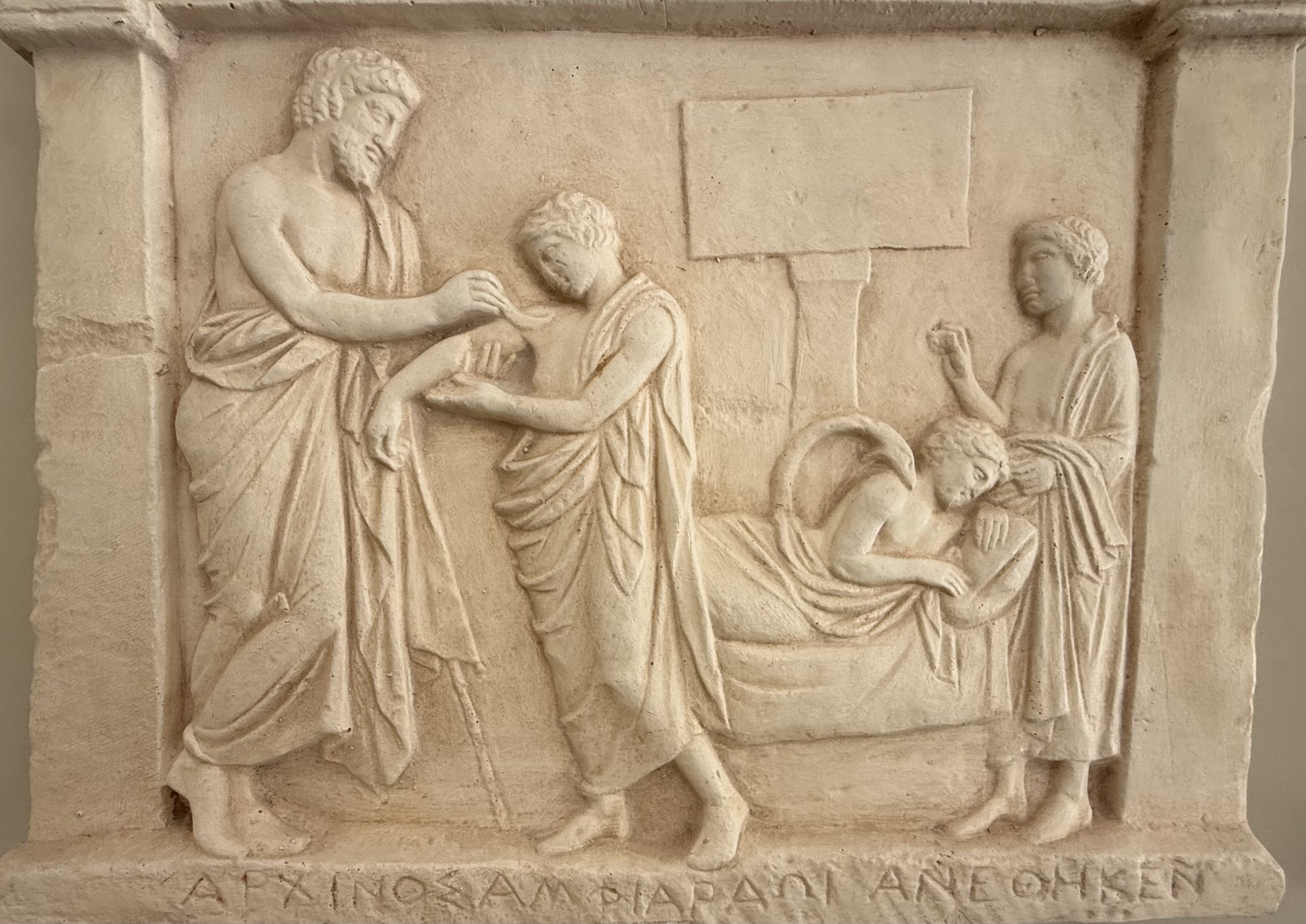
Cast replica of a marble bass relief offering depicting the Semi-God Amphiaraos, healing the patient Arhinos.
Amphiaraeio, Oropos, Attica; 1st half of the 4th c. B.C.
Inscription: Archinos consecrates to Amphiaraos
Amphiaraos was one of the most famous Greek Heroes who fought against Thebes. He was the grandson of the famous physician and king of Argos Melampous, of whom he inherited the knowledge of Medicine, Pharmacology and Prediction. He was venerated also as a great physician and his fame surpassed by far the Greek borders. In his flight from Thebes, Zeus in order to save him from being killed opened with a thunder a hole in which he fell in and from where healing water was springing out.
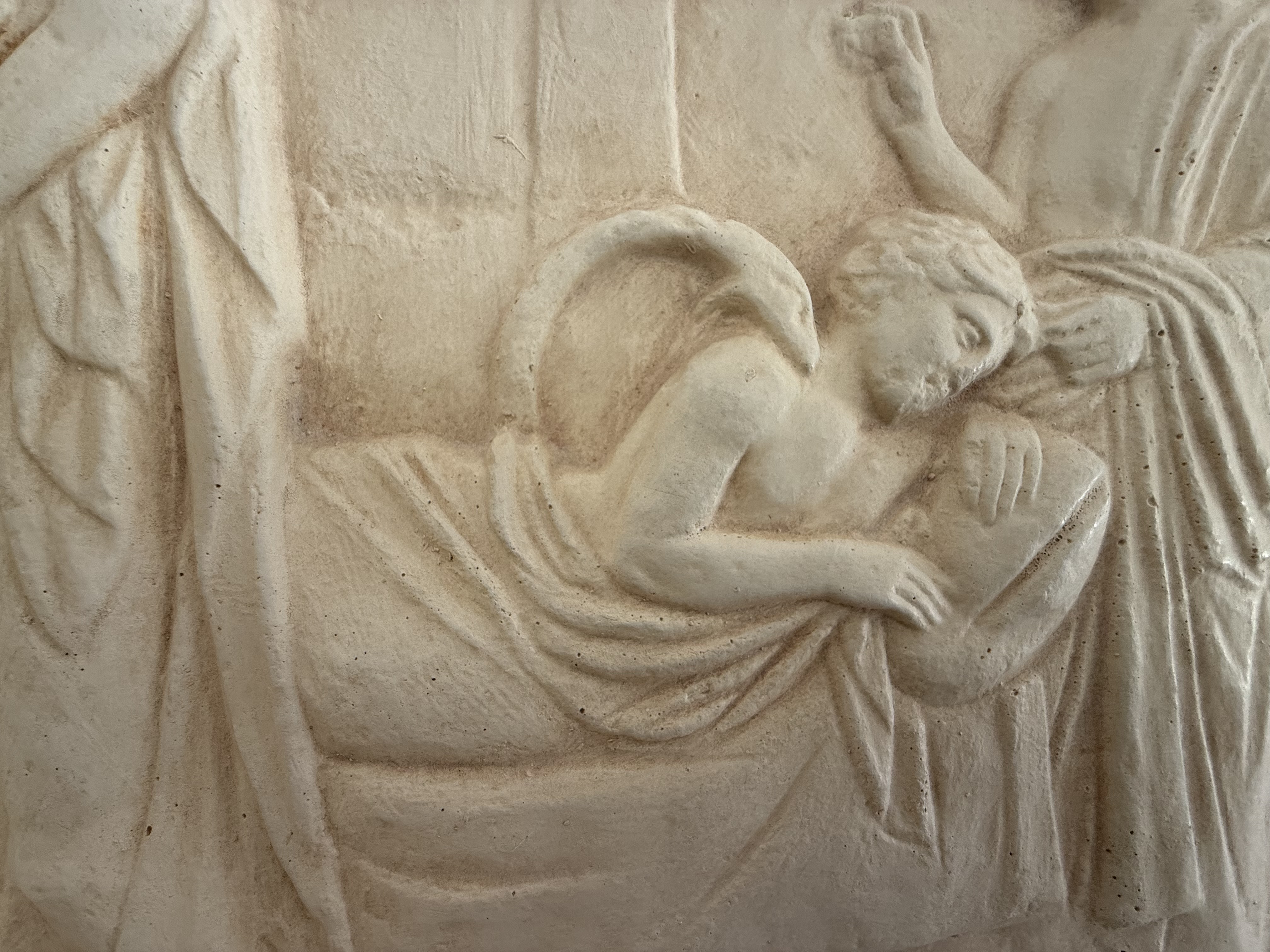
The relief depicts three phases of Archinos healing: On the right the entering of the patient in the temple, in the middle the envisaged therapy in sleep and on the left Amphiaraos operates Archinos on the shoulder.
Why is there a serpent associated with the in sleep incubation phase?
Between the therapies, a similar relief plate envisages the donation that Archinos has to give to Ampiaraos after his healing.
Incubation
The incubation chambers of the Asclepian healing temples — called ἐγκοίμησις (“sleeping within”) — are among the clearest ritual healing practices preserved from the ancient Mediterranean world. At sanctuaries dedicated to Asclepius, especially at places such as Epidaurus and Pergamon Asclepieion, the sick underwent purification rites, fasting, bathing, sacrifice, and guided preparation before entering a dark, quiet sleeping hall known as the ἄβατον (“the inaccessible place”). There the initiate would lie down to sleep, awaiting a dream, vision, or encounter with the god, often mediated through sacred serpents associated with healing and renewal. Numerous inscriptions record cures received through these dream encounters, ranging from paralysis and blindness to psychological distress and chronic illness.
The surviving evidence suggests that these spaces functioned as carefully controlled ritual environments rather than ordinary dormitories. The architecture, purification procedures, symbolic darkness, sensory isolation, chanting, sacred narratives, and priestly guidance all point toward a deliberately induced altered state of consciousness. Ancient healing in the Greek world was not sharply separated into “medical” versus “religious” categories; rather, θεραπεία (“care” or “service”) involved the harmonization of body, psyche, dream, and divine order within a structured sacred setting. The incubation chamber therefore resembles what modern psychology or psychedelic therapy might call a therapeutic container: a protected ritual space designed to allow catharsis, symbolic confrontation, emotional release, and visionary integration under supervision.
Some modern scholars and independent researchers have speculated that certain incubation rites may also have involved pharmaka — psychoactive or physiological substances — especially in traditions connected to serpents, venom lore, ecstatic healing, or mystery initiation. While direct evidence for psychedelic administration inside the Asclepian abaton remains unproven, parallels with later ritual technologies preserved in the Greek Magical Papyri (PGM) are striking: darkened chambers, purification, guided visionary states, sacred formulas, sleep incubation, and prolonged recovery periods after intense ritual ordeals. Within that framework, the incubation hall could be interpreted not merely as a sleeping room, but as a controlled cathartic recovery chamber — a ritual container in which initiates processed altered states potentially induced by fasting, exhaustion, breathwork, entheogenic compounds, or even carefully administered snake venoms associated with ancient θεραπεία and pharmakon traditions.
The End
Healing temples of Asklepios originated around the eighth c. B.C. By the fourth century temples were in many places on the mainland and during the next centuries they spread all over the Mediterranean sea.
At least 400 functioned without interruption up to the end of the 4th c.A.D., when the Christian emperor Theodosios I (379-395 A.D.) prohibited pagan temples.
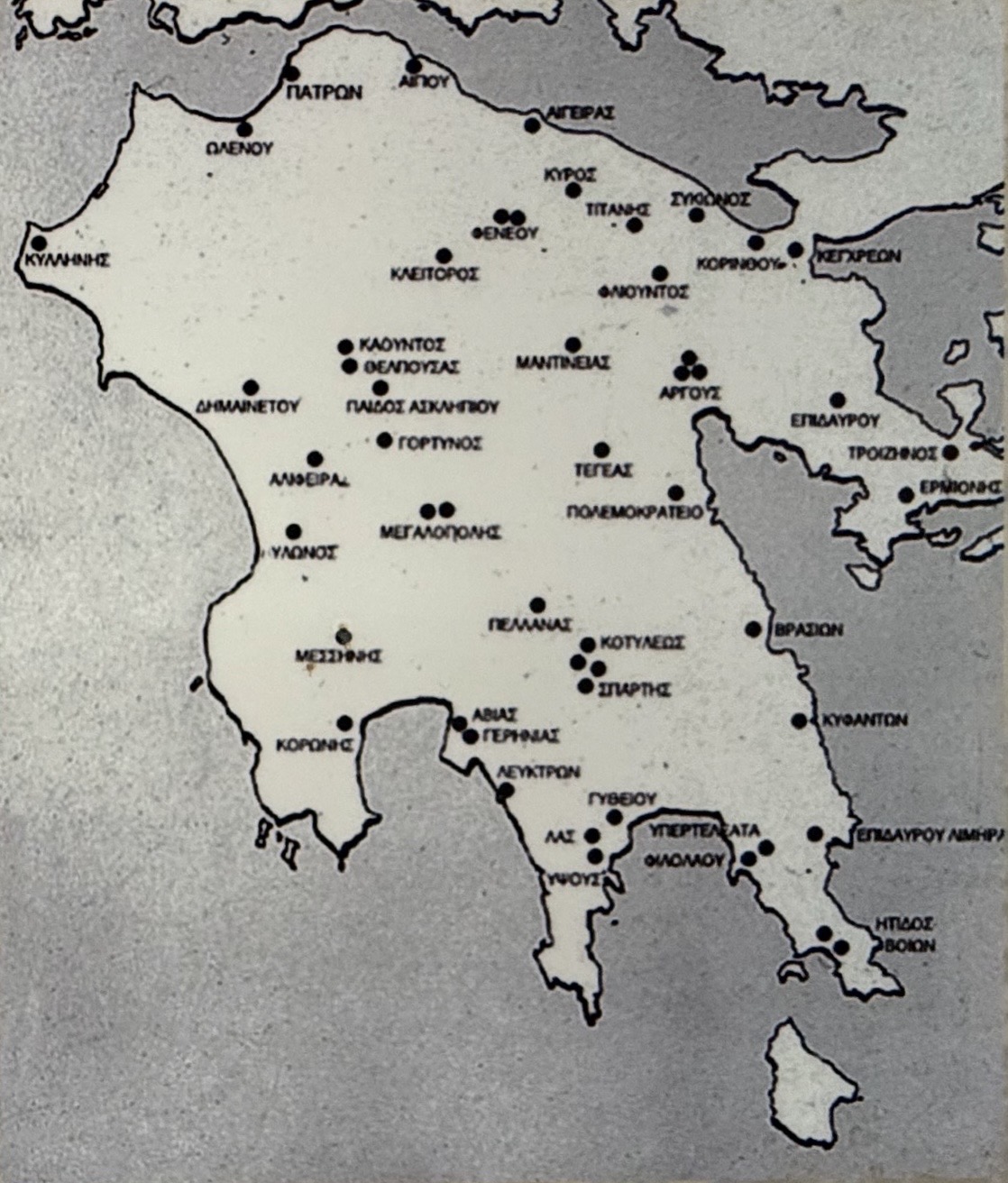
Cites of 45 Asklepieia excavated on Peloponnese.
At Kos
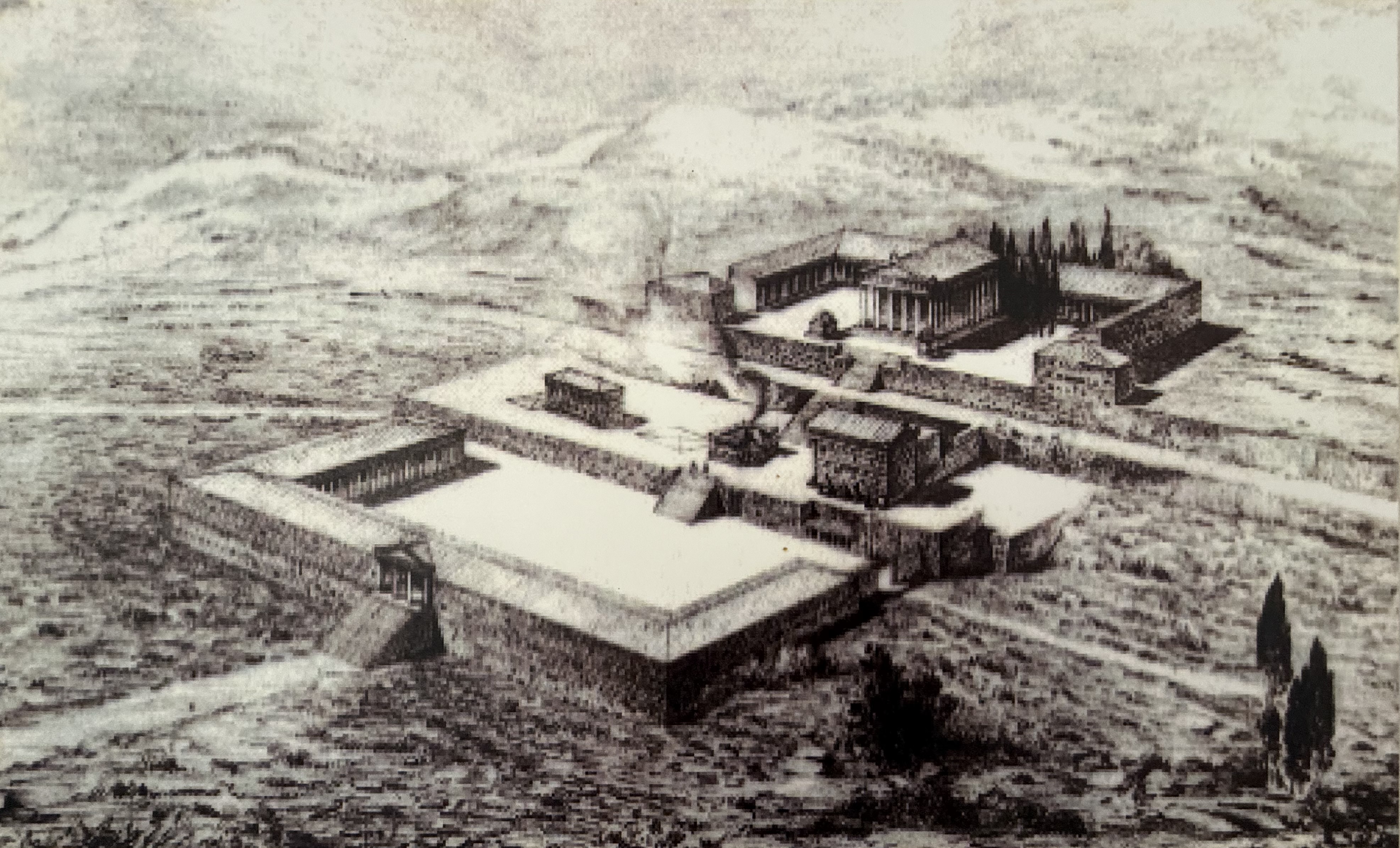
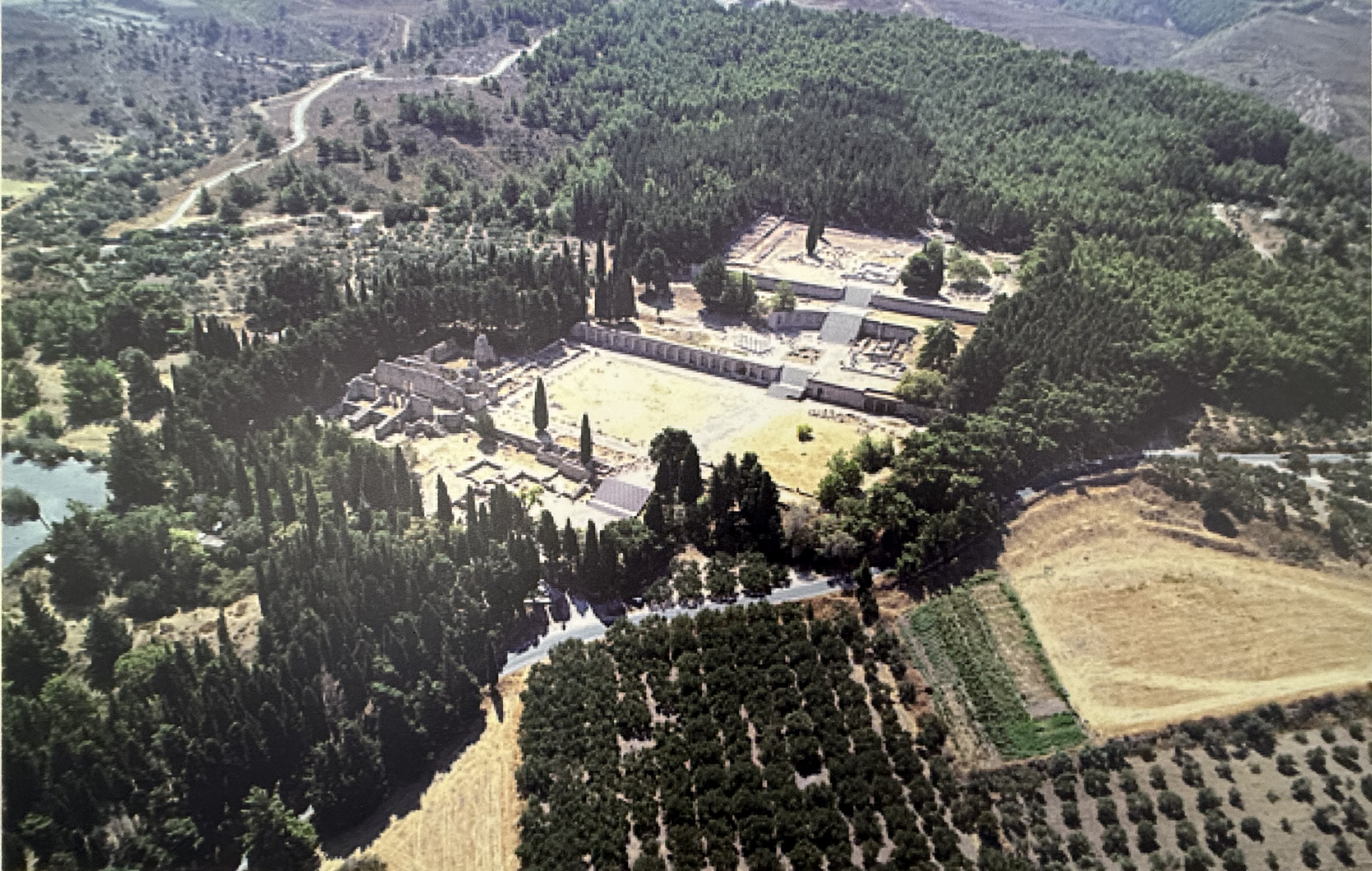
On the second level the purification of the soul of the patient would take place by making an offering to Asklepios at the altar.
On the left of the ruins of the altar can one still observe the older temple of Asklepios and on the right a temple dedicated to Apollo.
In the third level the temple of Asklepios included the famous statues of Asklepios, Hygeia and Epione, made by the sons of Praxiteles. Behind the temple the incubation site was located.
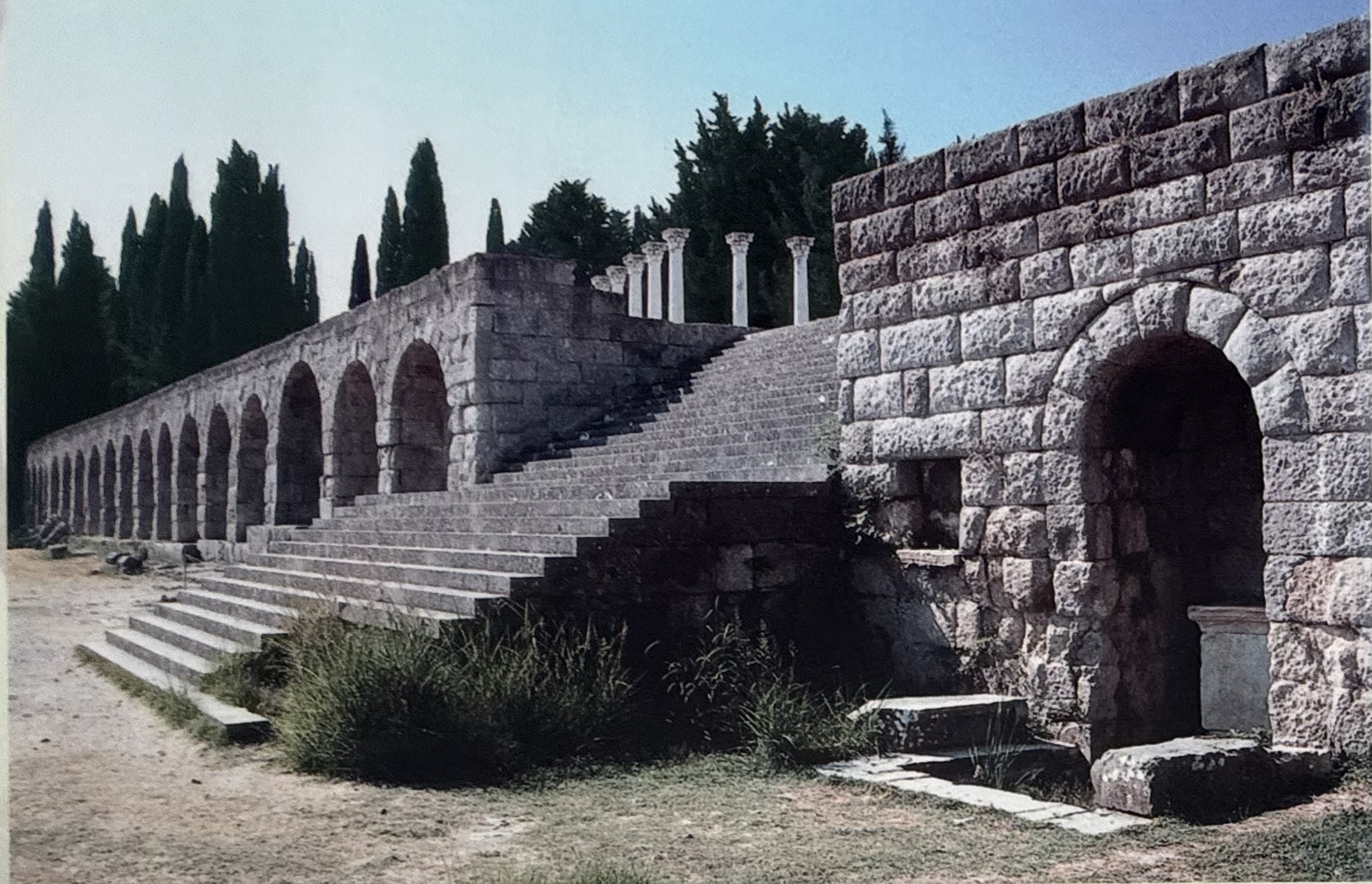
Stairs towards the second level of the Asklepieion of Kos
On the opposite side the restored niches were probably occupied by statues and contained at least one shrine (third apsis left to the stairs).
The water of this holy shrine as also of the fountains that were built between the first and the second level was channeled through a several kilometers long aqueduct. It contained sulfurous and ferruginous water that was rich in calcium, magnesium salts as free carbonic acid. When patients were cleansed and examined, they could go up to the second level.
Hippocrates
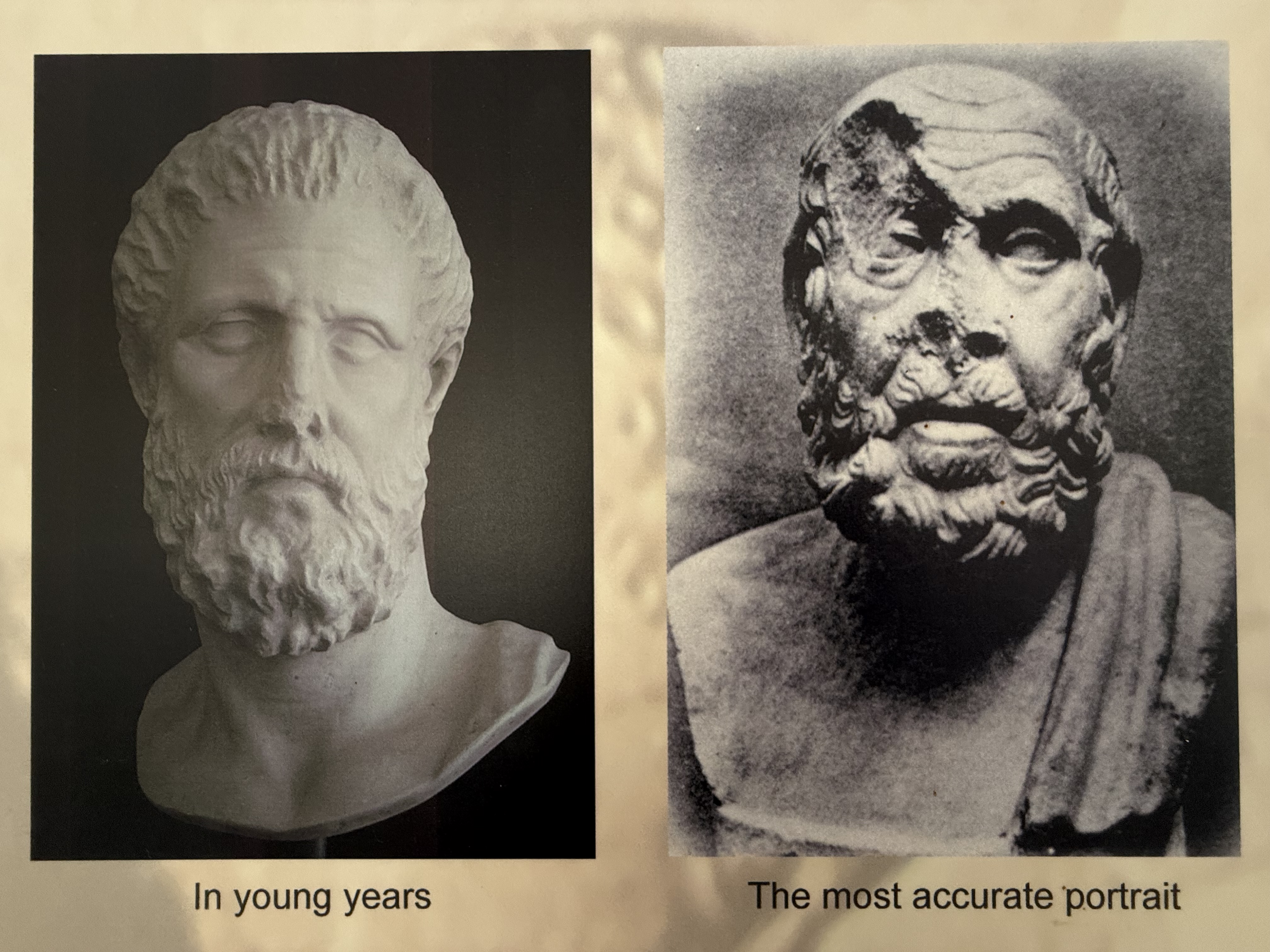
Hippocrates learned medicine at the former Kos Asclepion, which was destroyed
After the death of Hippokrates his two sons Thessalos and Drakon and his son-in-law
Polybos continued the way of their great ancestor.
They transmitted his knowledge to their children Hippokrates Ill and Hippokrates IV. All of them became well known and influential physicians.
It was in their time when the new Asklepieion of Kos as it is known today was built. The old one where Hippokrates had learned medicine was destroyed by a great earthquake in 413/412 B.C.
The sanctuary is built on three different levels.
Coming from the harbor and town one enters the first terrace by a staircase and a portico, which is unfortunately destroyed.
In the first level patients and their family would be welcomed, observed and asked for the reason of their visit, their case history taken and their symptoms observed. Here they could wash themselves and stay in the rooms that were built around the terrace in the shape of a Greek «П».
In front of the rooms a colonnade was protecting the rooms from sun and rain.
Sources
Ἀσκληπιοῦ, θυμίαμα, μάνναν.
Ἰητὴρ πάντων Ἀσκληπιέ, δέσποτα Παιάν,
θέλγων ἀνθρώπων πολυαλγέα πήματα νούσων,
ἠπιόδωρε, κραταιέ, μόλοις κατάγων ὑγίειαν,
καὶ παύων νούσους χαλεπὰς θανάτοιο τε κῆρας.
αὐξιθαλής κόρε, ἀπαλεξίκακ’, ὀλβιόμοιρε,
Φοίβου Ἀπόλλωνος κρατερὸν θάλος ἀγλαότιμον,
ἐχθρὲ νόσων, Ὑγίειαν ἔχων σύλλεκτρον ἀμεμφῆ,
ἐλθέ, μάκαρ, σωτήρ, βιοτῆς τέλος ἐσθλὸν ὀπάζων.
Asclepius, fragrance, manna, Healer of all, O Asclepius, master physician (lord Paean), charming the many (manifold) grievous ailments of mankind, gentle‐giver, mighty one, bring health by hard toil, and stopping diseases, dire death’s doom. O child growing with increase, repeller of evil, blessed one, strong shoot of Phoebus Apollo, illustrious in radiance, foe of diseases, having unblemished companion Health (Hygieia), come, O blessed saviour, granting the good end of life.”
This artwork portrays a sacred healing ritual within the ancient Greek Temple of Asclepius.... the god of medicine and divine restoration. In the scene, a priest and a patient stand before a steaming altar, invoking the sacred serpents of the sanctuary. These snakes contain the healing power of the god himself.
The inscription upon the wall reads “Ζῆσον κατὰ φύσιν” .....“Live according to nature” .....a phrase that captures the essence of ancient Greek philosophy and medicine: that true healing comes from harmony with the natural order.
Within these temples, patients sought both physical and spiritual renewal. They would purify themselves, offer incense, and sleep within the sacred chambers, awaiting dreams and visions from Asclepius that revealed cures or divine guidance. The serpents moving through the halls were not feared, but revered for their regeneration.
Here healing was sacred.... illness was seen as disharmony between soul and cosmos, and recovery was a divine act of calling the spirit back into balance with the eternal order of life.
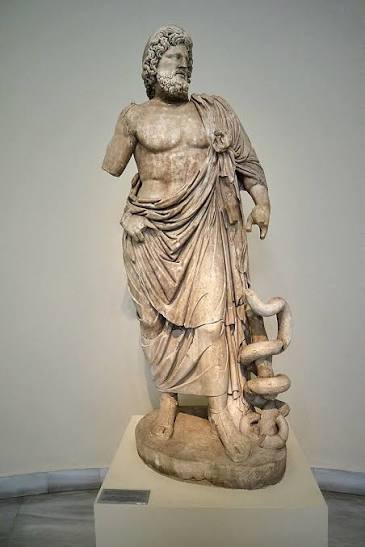
Asclepius with Caduceus. Athens Museum.
See Also
- Snakes in the ancient world, what was so special about them?
- Pharmakon in the ancient world, including Thanasimon and Theriac and The Purple
- Medea and Medusa and the Echidnaic Priesthood
- Rod of Asclepius