![[back]](/assets/home_24dp_E3E3E3_FILL0_wght400_GRAD0_opsz24.svg "[back]")
![[search]](/assets/search_24dp_E3E3E3_FILL0_wght400_GRAD0_opsz24.svg "[search]")
Gorgon
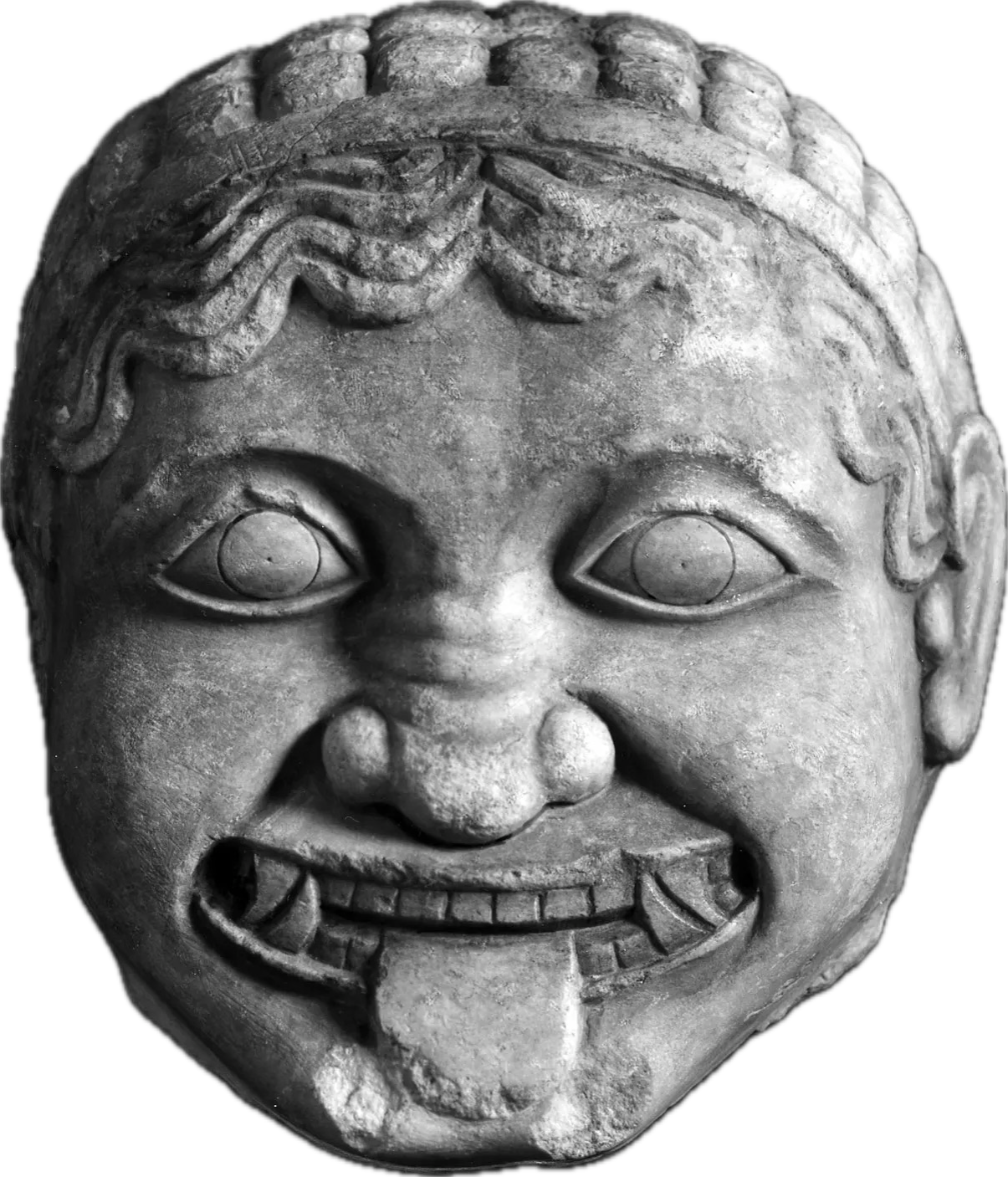
early Gorgon depiction
Medea's personal body guard
As Echidnaic Priestesses conducting the Mystery Rite
It’s a small fragment from 4th B.C that’s a comedy titled as “Gorgons.”"GORGONS (1) Pour a drink, pour a drink! Someone hand me, quick, that fire-forged, short-eared, round, thick-mouthed drinking-cup, child of the gullet!"
ΓΟΡΓΟΝΕΣ
(1) πιεῖν, πιεῖν τις ἔγχει πυριγενῆ
λαβὼν βραχύωτον κυκλοτερῆ παχύστομον
κώθωνα, παῖδα φάρυγος.
Drinking from the cup
So in the 4th during a comedy, they were using euphemisms to drinking from a vagina... thick mouthed, soaked in drugs (fire forged), short eared (labia I guess), round... and attributing that to what you do with Gorgons.
Here they are alluding to Gorgons being those Medwa, those Echidnaic priestesses, those Oracular priestesses, who conduct The Mystery, in which the initiate drinks from that cup
Georgia / Gorgon
Land
The names of the nation of Georgia derives from Old Persian designation of the Georgians vrkān meaning "the land of the wolves", that would eventually transform into gorğān, term that finds its way into most European languages as "Georgia".
Medusa / Medea
Medusa was a gorgon. And Georgia is the old land of Colchis, which is where Medea and her Medusae (priestesses) including her personal bodyguards the Gorgons, were located.
Scythians
In history, Medea and her priestesses were descended from the Scythians who were horseback bow hunters, they put venoms in their hair and drew their arrowheads over the hair before shooting their victims to "freeze" them via the paralysis of the venom. Explains the later Pythia priestesses at Delphi, and importance of snake imagery across Hellenism.
Medicine
Much bronze/iron age medicine was also based on the venoms.Wolves
Lupa (female wolf) was a term also given to these temple priestesses... later re-branded as "whores" by the christian church. So, there's your wolf connection.
George
St George (christian) was important (much later) in the region fighting a dragon. Dragons are those serpents, those priestesses... A dragon is a temple guardian of relics and secrets. A person, not a mythical creature. It's a title. It's the church fighting the previous religion, and obscuring that history.