![[back]](/assets/home_24dp_E3E3E3_FILL0_wght400_GRAD0_opsz24.svg "[back]")
![[search]](/assets/search_24dp_E3E3E3_FILL0_wght400_GRAD0_opsz24.svg "[search]")
Ancient Greek - Language Study

Ancient Greek - Language Study
Table of Contents
- Materials
- Intro - Alphabet & Pronunciation
- Intro - Writing Accents
- Unit 1 - Noun Declension
- Unit 1 - Definite Article
- Unit 1 - Misc Vocab
- Unit 2 & 3 - Verb Conjugation
- Unit 4 - Noun 1st Declension Update
- Unit 4 - Adjective 1st / 2nd Declensions
- Unit 4 - Conditional Sentences
- Unit 5 - Verbs in Passive Voice
- PERFECT INDICATIVE PASSIVE OF CONSONANT STEMS
- PLUPERFECT INDICATIVE PASSIVE OF CONSONANT STEMS
- PERFECT INFINITIVE PASSIVE OF CONSONANT STEMS
- Genitive of Personal Agent
- Dative of Personal Agent
- Dative of Means or Instrument
- Substantive use of the adjective
- Substantive use of the article
- The articular infinitive
- Unit 6 - 3rd declension nouns
- Unit 7 - Middle Voice
- Unit 7 - 2nd aorist active & middle voice
- Hortatory Subjunctive
- Greek Diminutive
- That's all for now
- See Also
Materials
Grab a reference guide to help you quickly work through translations.- Fisch study guides
- The Aion study guide
- Soular
- 2026 4wk Intensive Course
- Video Instruction - Hansen and Quinn Units 1-20 - taught by Dr Hillman
- 2026 4wk Intensive Course Notes - some nice visualizations from the students of this course
Other drills and learning resources
- SomaLibrary Drills! - quiz yourself with our short drills
- kosmossociety.org videos
Book
- Hit the Resources for Greek an Intensive Course by Hansen and Quinn, and others that will teach everything you see below.
See Below for the
More at the bottom under See Also
Intro - Alphabet & Pronunciation
The Ancient Greek alphabet (Alpha Beta, right?)
| Carved into Stone | Written on Scrolls | Letter Name | Sounds Like |
|---|---|---|---|
| Α | α | alpha | (long) ah (father), (short) uh (brother) |
| Β | β | beta | b |
| Γ | γ | gamma | g |
| Δ | δ | delta | d |
| Ε | ε | epsilon | eh |
| Ζ | ζ | zeta (dzeta) | dz |
| Η | η | eta | ay |
| Θ | θ | theta | th |
| Ι | ι | iota | (long i) ee, (short i) ih |
| Κ | κ (ϰ) | kappa | k |
| Λ | λ | lambda | l |
| Μ | μ | mu | m |
| Ν | ν | nu | n |
| Ξ | ξ | xi (ksee) | ks |
| Ο | ο | omicron (ah·muh·kraan) (micro o) | (short) ah (pot) |
| Π | π | pi (pee) | p |
| Ρ | ρ | rho | r |
| Σ (Ϲ) | σ,ς (ϲ) | sigma | s |
| Τ | τ | tau | t |
| Υ | υ | upsilon (oops·il·on) | (long) oo (glue), (short) u (put) |
| Φ | φ | phi | f |
| Χ | χ | chi (hee) | chk (breathy "k" back of tongue, cat hiss) |
| Ψ | ψ | psi | ps |
| Ω | ω | omega (mega o) | ou (flow) |
| --- | --- | --- | --- |
| * Ϝ | * ϝ | * digamma | * w (water) |
Recite your alphabeta
δεζ - delta epsilon zeta
ηθι - heta theta iota
κλμ - kappa lambda mu
νξο - nu ksi omicron
πρσ - pi rho sigma
τυφ - tau upsilon phi
χψω - (c)hi psi omega
----
ϝ - digamma
[Dr Hillman recites the ancient greek alphabet]
audio only
Pronunciation - Accents, Dipthongs, Punctuation
Hard Breath - (vowel | diphthong) starts word use
- ( curve above ἑ - “hey” hard breath
- ) curve above ἐ - “ey” soft breath
Accent vocal pitch + slight stress
Can only appear on 1 of 3 last syllables in a word
- / ramp above ά - up
- \ ramp above ὰ - down
- ~ curve above ᾶ - up down
Long or short vowel
- _ above ᾱ - long
- α - short
- Long : α ah, η ay, ι ee, ω ou
- Short : α uh, ε eh, ι ay, υ oo
- Long : all diphthongs
Can combine
- )/ - ἄ soft and accent
- (/ - ἅ hard breathing and accent
- _/ - ᾱ́ accented and long
Diphthongs (acc/brth mark goes over 2nd char)
αι - eye
ει - ay
οι - oy
υι - wih
αυ - ow
ευ - eh oo
ηυ - ay oo
ου - οο
short ι after vowel (ι is not pronounced!)
- Subscript (for lowercase)
- ᾳ - α with dot under - ay
- ῃ - η with long feet
- ῳ - ω with a dot under
- Needs a breathing mark ) or (
- Adscript (for uppercase)
- Αι
- Ηι
- Ωι
- Needs a breathing mark ) or (
γ Gamma combines (first γ becomes 'n' sound)
- γγ - ng - anger - ἄγγελος
- γκ - nk - banker - αγκυρα
- γξ - nx - sphinx - σφίγξ
- γχ - nkh- lunkhead - ὀξύρρυγχος
Labial, Dental, Palatal
| Hard | soft | aspirated | |
|---|---|---|---|
| labial | π | β | φ |
| dental | τ | δ | θ |
| palatal | κ | γ | χ |
Double consonants
- Ψ - πς, βς, φς (Labial + ς)
- ζ - δζ (Dental + ζ)
- ξ - κς, γς, χς (Palatal + ς)
Hansen Greek is unaspirated
This is aspirated pronunciation with hard breath (
- π (p) with hard breath ( results in φ (ph)
- τ (t) with hard breath ( results in θ (th)
- κ (k) with hard breath ( results in χ (ckh)
This is unaspirated, soft breath )
- π (p)
- τ (t)
- κ (k)
fricatives - φ (f), θ (th), χ (ckh)
Notice the labial, dental, palatal?
Punctuation
- Comma and Period ,. Same as English
- Colon and Semicolon · Dot
- Question mark ; English semicolon
- Quotation marks “ rarely used if ever
Capitalization
- Original ancient texts didn't have capitalization (or accents), it was added by later scribes.
- Rules:
- Proper name
- First word of paragraph
- Not first word of sentence
Intro - Writing Accents
Are you writing? In a Ancient Greek Spelling Bee? Looking to pronounce unaccented texts?If so, then pay attention to THIS Section.
(if not, then you can skip it).
e.g. n-1 is last character...
Ultima - [n-1] last char
Penultima - [n-2] 2nd to last char
Antepenult - [n-3] 3rd to last char
Rules for accents / \ and ~
- / - acute
- [n-1] - allowed when there’s a pause .,·
- Otherwise use \ with no pause - [n-2] - allowed if not long followed by short
- short short - [n-3] - allowed when [n-1] is short
- long short - \ - grave
- [n-1] - allowed
- Replaces / when no pause - ~ - circumflex
- [n-1] - allowed over long vowels
- [n-2] - allowed over long vowels
- required when accented+(long | dipthong) followed by short
- forbidden when [n-1] is (long | dipthong) - 3 syllables recessive
- [n-1] is
- short? / on [n-3]
- (long | diphthong)? / on [n-2] - 2 syllables recessive
- Must be on [n-2], last two are
- short (any) ? - /
- (long | diphthong) short - ~
- (long | diphthong) (long | diphthong) - /
- [n-1] - allowed when there’s a pause .,·
Recessive accent
- when on farthest syllable back allowed by rules
- most verb forms are recessive
- Verb: stop: )/επανσα
Persistent
- when accent stays on the same (vowel | dipthong) between all forms of word
- Persistent on most nouns, βιβλίων and learned with vocab
- May change if rules require it
Unit 1 - Noun Declension
Noun structure
- stem - dictionary meaning
- ending - case, gender, number (inflection)
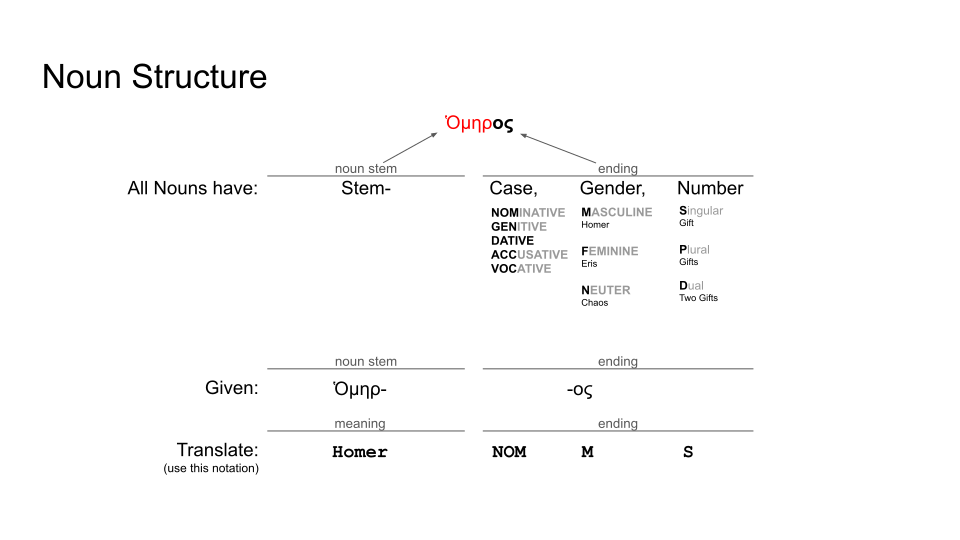
Noun Structure - Unit 1
Noun Case - puts the noun in one of a possible number of relations to the rest of the words in the sentence.
- NOMINATIVE: subject, predicate nominative, naming things (The Homer)
- GENITIVE: from; of; away from/out of; possessive (gifts from Homer)
- DATIVE: to/for; by with; in/at; indirect object (gifts to Homer)
- ACCUSATIVE: motion toward, direct object, or length of space or time (teach Homer)
- VOCATIVE: invoking someone; a noun is being addressed directly (O Homer!)
Noun Gender - Masculine, Feminine, Neuter
Noun Number - Singular, Plural, Dual
Noun Inflection
- declension (noun is declined)
Verb Inflection
- conjugation (verb is conjugated)
1st declension nouns (feminine)
| Stem end ε,ι,ρ | ||
| Nom Singular | -η | -ᾱ |
| Genitive | -ης | -ᾱς |
| Dative | -ῃ | -ᾱͅ |
| Accusative | -ην | -ᾱν |
| Vocative | -η | -ᾱ |
| Nom Plural | -αι | -αι |
| Genative | -ῶν | -ῶν |
| Dative | -αις | -αις |
| Accusative | -ᾱς | -ᾱς |
| Vocative | -αι | -αι |
2nd declension nouns
| M/F | N | |
| Nom Singular | -ος | -ον |
| Gen. | -ου | -ου |
| Dat. | -ῳ | -ῳ |
| Acc. | -ον | -ον |
| Voc. | -ε | -ον |
| Nom Plural | -οι | -α |
| Gen. | -ων | -ων |
| Dat. | -οις | -οις |
| Acc. | -ους | -α |
| Voc. | -οι | -α |
Practice Memorization:
Unit 1 - Definite Article
Definite article (The) - Declension
| M | F | N | |
| Nom. | ὁ | ἡ | τό |
| Gen. | τοῦ | τῆς | τοῦ |
| Dat. | τῶ | τῇ | τῷ |
| Асс. | τόν | τήν | τό |
| Nom. P | οἱ | αἱ | τά |
| Gen. | τῶν | τῶν | τῶν |
| Dat. | τοῖς | ταῖς | τοῖς |
| Асс. | τούς | τᾱ́ς | τά |
Unit 1 - Misc Vocab
| εἰς (prep.) + acc. | into, to; for (purpose) |
| ἐκ͵ ἐξ (prep.) + gen. | from, out of |
| ἐν (prep.) + dat. | in |
| και (conj. or adv.) | (conj.) and |
| (adv.) even, also | |
| και…και (conjs.) | both…and |
| ὦ (interjection) | used with vocative |
ἡ ζεως - hey Zeus - (the Zeus)
χριω
χριος
ἡ χριστος - the christ
Unit 2 & 3 - Verb Conjugation
Verbs must be conjugated.
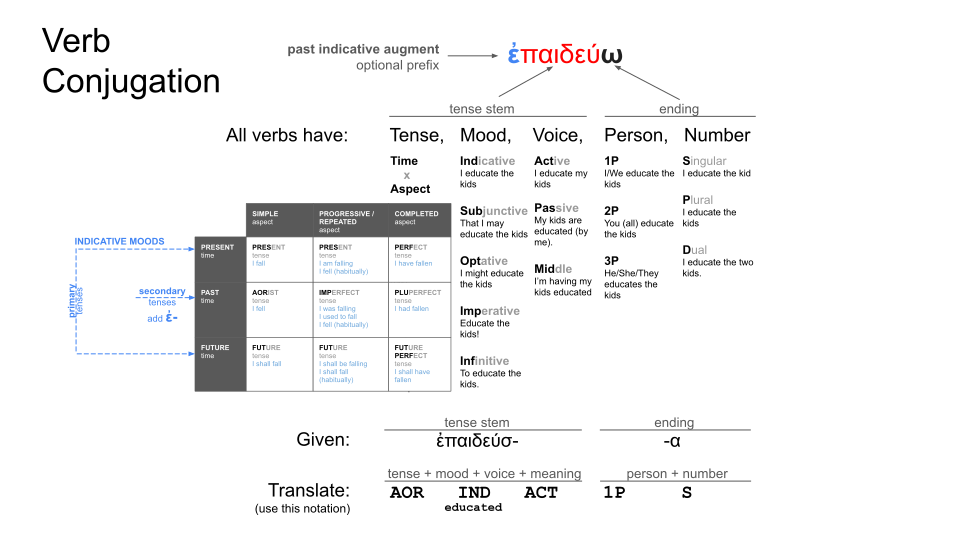
Verb Conjugation
All verbs have 6 principle parts that are not deterministic, must be looked up (and learned, for each verb).
Similar to English sing,sang,sung.
But there are 6.
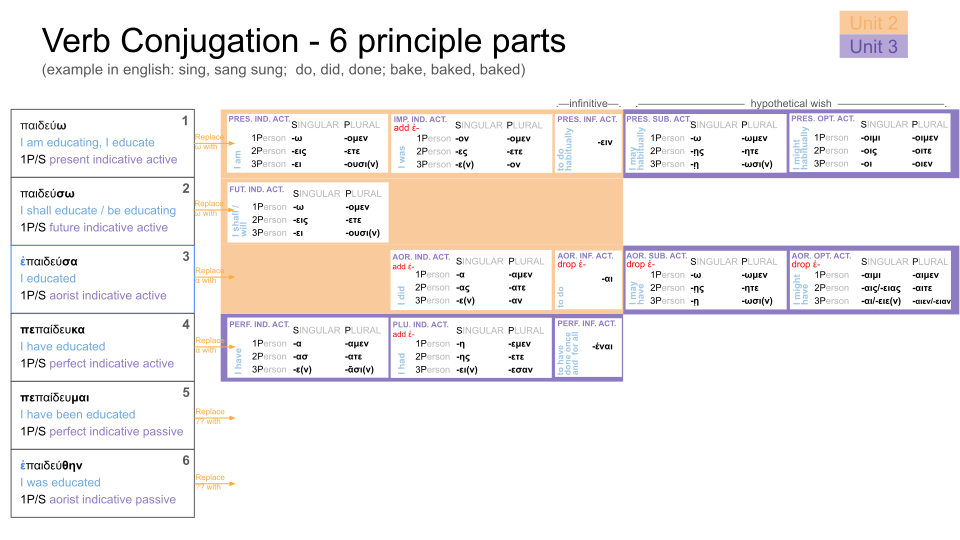
Verb Conjugation - 6 Principle Parts + their Endings
Practice Memorization:
- [Audio Only - Maddalena Sings the Conjugations - Verb - 9min loop]
- [Watch Dr Hillman recite verb endings for Unit 2]
Unit 4 - Noun 1st Declension Update
Let's update the 1st declension table with 2 new columns:
- Sometimes a Feminine noun will end in a short α.
- Sometimes a 1st declension is Masculine.
1st declension nouns
| F | F (-ε,-ι,-ρ) | F α | F α (ε,ι,ρ) | M | M (ε,ι,ρ) | |
| Nom Singular | -η | -ᾱ | -α | -α | -ης | -ᾱς |
| Genitive | -ης | -ᾱς | -ης | -ας | -ου | -ου |
| Dative | -ῃ | -ᾷ | -ῃ | -ᾷ | -ῃ | -ᾷ |
| Accusative | -ην | -ᾱν | -αν | -αν | -ην | -ᾱν |
| Vocative | -η | -ᾱ | -α | -α | -α / -η | -ᾱ |
| Nom Plural | -αι | -αι | -αι | -αι | -αι | -αι |
| Genative | -ῶν | -ῶν | -ῶν | -ῶν | -ῶν | -ῶν |
| Dative | -αις | -αις | -αις | -αις | -αις | -αις |
| Accusative | -ᾱς | -ᾱς | -ᾱς | -ᾱς | -ᾱς | -ᾱς |
| Vocative | -αι | -αι | -αι | -αι | -αι | -αι |
Unit 4 - Adjective 1st / 2nd Declensions
Just like the definite article...
...The adjective must agree in case/gender/number with the noun it modifies.
attributive position
NOTICE: the adjective in the attributive position
- ὁ ἀγαθὸς ἄνθρωπος - the good man
- ὁ ἄνθρωπος ὁ ἀγαθός - the good man (the man, the good one)
- ἄνθρωπος ὁ ἀγαθός - the good man (a man, the good one)
predicate position (adjective that agrees with a noun, but without it's own article)
- predicate adjective
- NOTICE: article + noun is the subject; adjective is the predicate adjective.
- ὁ ἄνθρωπος ἀγαθός - the man is good
- ἀγαθὸς ὁ ἄνθρωπος - the man is good
- οἱ ἄνθρωποι ἀγαθοί - the men are good
- predicate noun
- NOTICE: two nouns, one is the subject, one is the predicate noun
- τὸ βιβλίον δῶρον - the book is a gift
- δῶρον τὸ βιβλίον - the book is a gift
3 ending adjectives 1st and 2nd declension
| M | F | N | |
| Nom Singular | -ός | -ή | -όν |
| Genitive | -οῦ | -ῆς | -οῦ |
| Dative | -ῷ | -ῇ | -ῷ |
| Accusative | -όν | -ήν | -όν |
| Vocative | -έ | -ή | -όν |
| Nom Plural | -οί | -αί | -ά |
| Genative | -ῶν | -ῶν | -ῶν |
| Dative | -oῖς | -αῖς | -οῖς |
| Accusative | -oύς | -ἆς | -ά |
| Vocative | -oί | -αί | -ά |
2 ending adjectives 2nd declension
| M/F | N | |
| Nom Singular | -ος | -ον |
| Gen. | -ου | -ου |
| Dat. | -ῳ | -ῳ |
| Acc. | -ον | -ον |
| Voc. | -ε | -ον |
| Nom Plural | -οι | -α |
| Gen. | -ων | -ων |
| Dat. | -οις | -οις |
| Acc. | -ους | -α |
| Voc. | -οι | -α |
Unit 4 - Conditional Sentences
If... then...
- prostasis - assumption (negative is μή)
- apodosis - conclusion (negative is ού)
| Conditional Type | Protasis | Apodosis |
| Future More Vivid | ἐἆν + subjunctive does | future indicative will do |
| Future Less Vivid | εἰ + optative should do | optative + ἄν would do |
| Present General | ἐἆν subjunctive does | present indicative does |
| Past General | εἰ + optative did | imperfect indicative did |
| Present Contrafactual | εἰ + imperfect indicative were doing | imperfect indicative + ἄν would be doing |
| Past Contrafactual | εἰ + aorist indicative had done | aorist indicative + ἄν would have done |
Mixed Conditional - Sometimes the protasis / apodosis are mixed between types (in later Units).
elison
- when a word ends with a short vowel, and the following word begins with vowel/dipthong, the vowel at the end of the first word is sometimes dropped/elided and replaced with ᾽.
Unit 5 - Verbs in Passive Voice
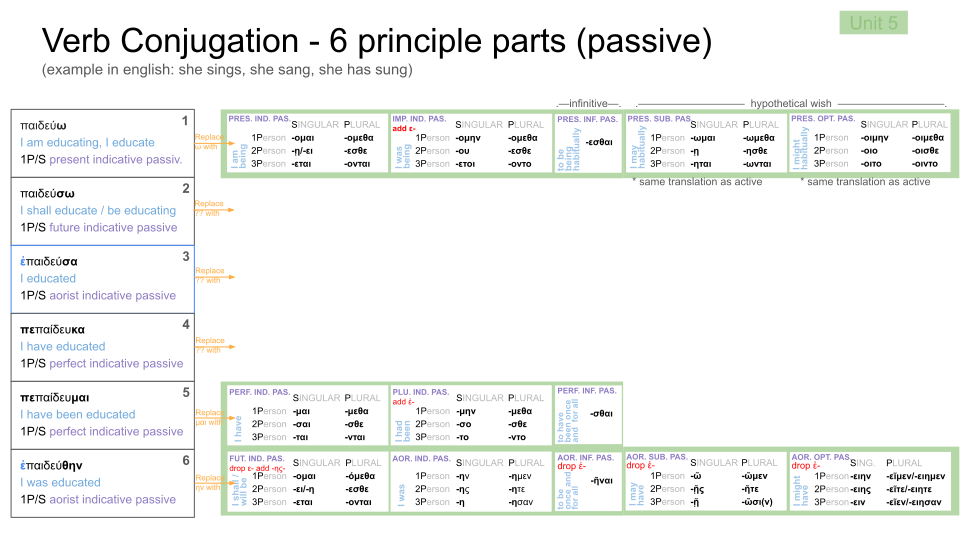
Verb Conjugation - Passive Voice
Consonant Stems
When the perfect passive tense stem ends in a consonant, writers avoid awkward clusters of consonants by smoothing that juncture between stem and ending. Principle Part V often has a consonant of the stem in an altered form. e.g. γέγραφμαι becomes γέγραμμαι
PERFECT INDICATIVE PASSIVE OF CONSONANT STEMS
| -μμαι | was | -μμαι | was | ||
| S | 1 | γέγραμμαι | (γέγραφμαι) | πέπεμμαι | (πέπεμπμαι) |
| 2 | γέγραψα | (γέγραφσαι) | πέπεμψαι | (πέπεμπσαι) | |
| 3 | γέγραπται | (γέγραφαι) | πέπεμπται | (πέπεμπται) | |
| P | 1 | γεγράμμεθα | (γεγράφμεθα) | πεπέμμεθα | (πεπέμπμεθα) |
| 2 | γέγραφε | (γέγραφσθε) | πέπεμφθε | (πέπεμπσθε) | |
| 3 | xxx | (γεγράφνται) | xxx | (πεπέμπνται) |
| -γμαι | was | -σμαι | ||
| S | 1 | πεφύλαγμαι | (πεφύλακμαι) | κεκέλευσμαι |
| 2 | πεφύλαξαι | (πεφύλακσαι) | κεκέλευσαι | |
| 3 | πεφύλακται | (πεφύλακται) | κεκέλευστοι | |
| Ρ | 1 | πεφυλαγμεθα | (πεφυλάκμεθα) | κεκελεύσμεθα |
| 2 | πεφύλαχθε | (πεφύλακσθε) | κεκέλευσθε | |
| 3 | xxx | (πεφυλάκνται) | xxx |
PLUPERFECT INDICATIVE PASSIVE OF CONSONANT STEMS
Exactly the same changes occur in the pluperfect indicative passive of conso- nant stems as in the perfect indicative passive.| -μμαι | |||
| S | 1 | ἐγεγράμμην | ἐπεπέμμην |
| 2 | ἐνέγραψο | ἐπέπεμψο | |
| 3 | ἐγέγραπτο | ἐπέπεμπτο | |
| P | 1 | ἐγεγραμμεθα | ἐπεπέμμεθα |
| 2 | ἐγέγραφθε | ἐπέπεμφθε | |
| 3 | xxx | xxx |
| -γμαι | -σμαι | ||
| S | 1 | ἐπεφυλαγμην | ἐκεκελεύσμην |
| 2 | επεφύλαξο | ἐκεκέλευσο | |
| 3 | ἐπεφύλακτο | ἐκεκέλευστο | |
| Ρ | 1 | ἐπεφυλαγμεθα | ἐκεκελεύσμεθα |
| 2 | ἐπεφύλαχθε | ἐκεκέλευσθε | |
| 3 | xxx | xxx |
PERFECT INFINITIVE PASSIVE OF CONSONANT STEMS
| -σθαι | |||
| γεγράφθαι | πεπέμφθαι | πεφυλάχθαι | κεκελεῦσθαι |
Genitive of Personal Agent
With most passive verbs, the personal agent is expressed by:
- ὑπό + the genitive
ὑπό τοῦ Ὁμήρου - by means of Homer
Dative of Personal Agent
With the perfect and pluperfect tenses, the personal agent is expressed by the dative case without any preposition.- the dative
Dative of Means or Instrument
A thing with which something is done is put in the dative without a preposition.- the dative
Substantive use of the adjective
Example:
- Simplify "The good people die young" to "The good die young" (drop the noun "people")
ὁ ἀγαθός - the good (man)
ἡ ἀγαθή - the good (woman)
Substantive use of the article
Since the definite article (the) has [gender, number case], it can be used as a substantive
οἱ - the men
τἆς - the women
τὰ - the things
The articular infinitive
An infinitive verb, accompanied by the article.Infinitives are best translated by the English gerund ("writing") rather than by the English infinitive ("to write"). e.g. the man writing with a red pen.
Behold:
| Nom. S | τὸ γράφειν | to be writing, to write (habitually), writing |
| Gen. | τοῦ γράφειν | of writing (progressive/repeated aspect) |
| Dat. | τῷ γράφειν | by writing (progressive/repeated aspect) |
| Acc. | τὸ γράφειν | writing (progressive/repeated aspect) |
| Nom. S | τὸ γράψαι | to write (once and for all), writing |
| Gen. | τοῦ γράψαι | of writing (once and for all) |
| Dat. | τῷ γράψαι | by writing (once and for all) |
| Acc. | το γράψαι | writing (once and for all) |
| Nom. S | τὸ γεγραφέναι | to have written, having written |
| Gen. | τοῦ γεγραφέναι | of having written |
| Dat. | τῷ γεγραφέναι | by having written |
| Acc. | τὸ γεγραφέναι | having written |
Unit 6 - 3rd declension nouns
| M or F | N | |
| Nom S | ---- | ---- |
| Gen | -ος | -ος |
| Dat | -ι | -ι |
| Acc | -α,-ν | ---- |
| Voc | ---- | ---- |
| Nom P | -ες | -α |
| Gen | -ων | -ων |
| Dat | -σι(ν) | -σι(ν) |
| Acc | -ας | -α |
| Voc | -ες | -α |
Rules:
- Nom S - learned from the standard vocab listing of each noun
- Acc S - almost all with consonantal stems use ending -α. Stems ending in -ιτ, -ιδ, -ιθ (without iota accent) drop the consonant and add -ν.
- Voc S
- identical to Nom S:
- when Nom S ends in -ξ or -ψ
- when Nom S ends in -ν or -ρ, and accents the ultima
- otherwise it's the stem alone (drop any final dental).
- All Voc S neuter nouns identical to Nom S.
- Some nouns dont follow this rule (given in the vocab).
- identical to Nom S:
- Nom / Voc P - identical. All neuter use ending -α in Nom/Voc/Acc P.
- Dat P - see below box for rules for combining Dat P ending -σι with 3rd declension consonantal stems.
π, β, φ + -σι = -ψι
κ, γ, χ + -σι = -ξι
τ, δ, θ + -σι = -σι
      ν + -σι = -σι
      σ + -σι = -σι
-αντ-   + -σι = -ασι
-εντ-   + -σι = -εισι
-οντ-   + -σι = -ουσι
      λ + -σι = -λσι with no change
      ρ + -σι = -ρσι with no change
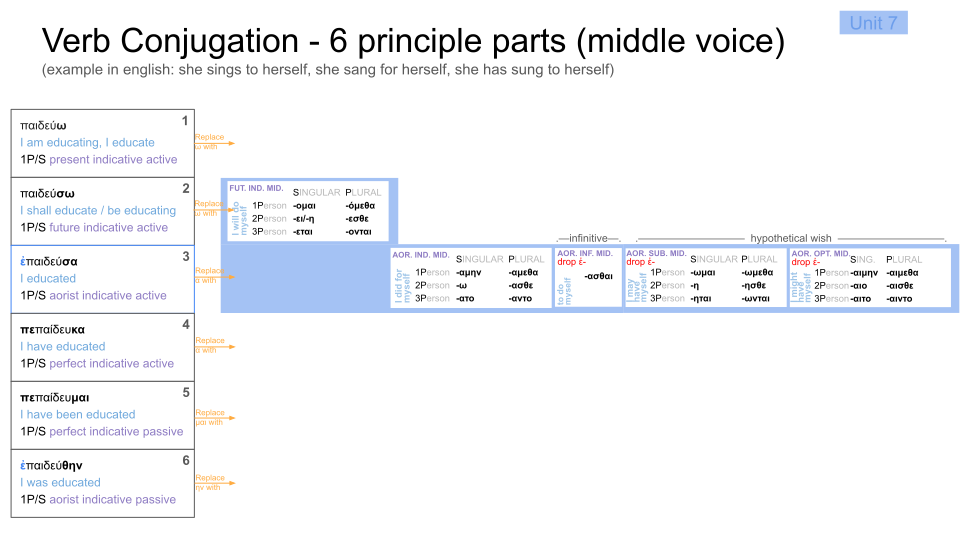
Unit 7 - Middle Voice
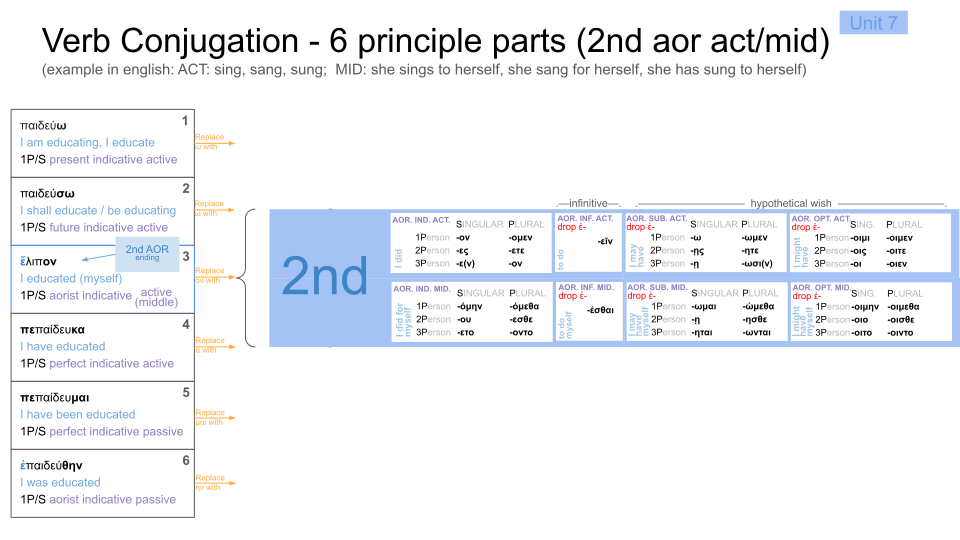
Unit 7 - 2nd aorist active & middle voice
Hortatory Subjunctive
A hortatory subjunctive is simply the Greek way of saying, "Let's do this!"
Quick Examples:
- λύωμεν (luōmen) – Let us loose!
- μὴ λύωμεν (mē luōmen) – Let us not loose!
- ἴωμεν (iōmen) – Let's go!
Greek Diminutive
Learn about the ισκος diminutiveThat's all for now
This takes you through some of the the basic mechanics of Hansen/Quinn's Introduction + Unit 1 + Unit 2 + Unit 3.There's a lot more in the book, so be sure to read it also.
See Also
- Materials are at the top of this page
- Hit the Resources for Greek an Intensive Course by Hansen and Quinn, and others that will teach everything you see above.
- Ammon U - Dr Hillman teaches ancient greek, using Hansen+Quinn...