![[back]](/assets/home_24dp_E3E3E3_FILL0_wght400_GRAD0_opsz24.svg "[back]")
![[search]](/assets/search_24dp_E3E3E3_FILL0_wght400_GRAD0_opsz24.svg "[search]")
Frankincense
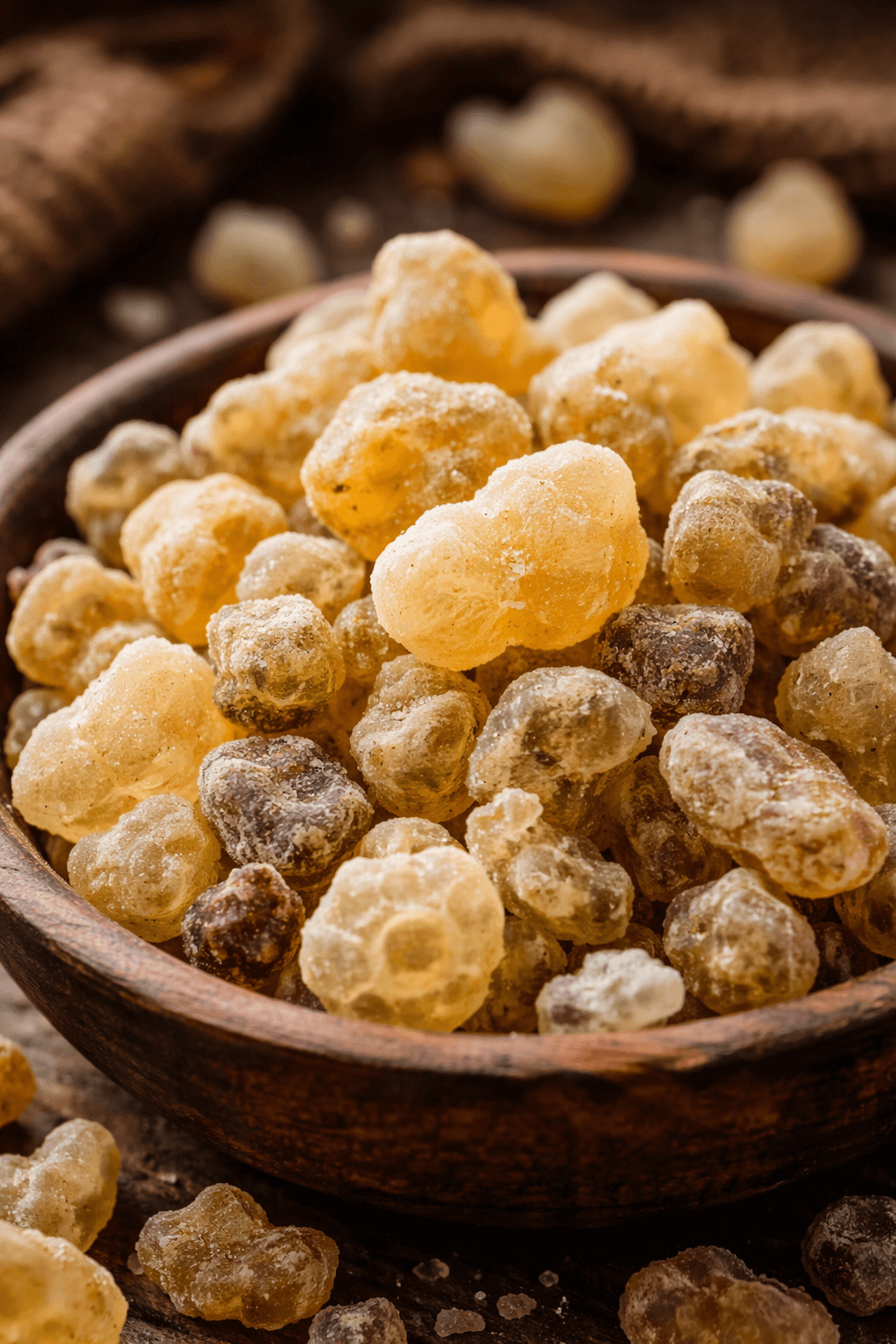
Frankincense resin
In Ancient Greek Texts
Frankincense is deeply embedded in Greek ritual life as incense (θύμιαμα) - an atmospheric pharmakon: scent + smoke + offering. Theophrastus, in On Odours, discusses frankincense (and myrrh) in a technical way: how gentle heat releases scent, how texture matters, and how aromatics behave under processing.
On trade and provenance: scholarship on ancient resinous aromatics notes the major role of southern Arabia/Horn of Africa sources and the immense economic importance of the incense trade; later writers cite Theophrastus on where most frankincense came from (e.g., Saba).
Today, Frankincense is the clearer “priestly” incense. Churches say it makes prayer visible: prayers rise, the sanctuary is marked as holy, the Gospel/altar/people are honored. Catholic rubrics explicitly call incensation “an expression of reverence and of prayer,” and place it at threshold moments: entrance, altar, Gospel, offerings, consecration. Orthodox explanations say it sanctifies the space, honors holy things and people, and makes the invisible visible: worshipers are at “the threshold of heaven.”
Mental State
Frankincense is a substance selected to promote:
- alert calmness
- attentional coherence
- sacred awe
- upward orientation
- clears mental clutter
- increases present-moment awareness
- mildly elevates mood
- creates spacious attention
Frankincense: spaciousness, lifted attention, calm awe, prayerful verticality, easier surrender to chant and liturgical guidance. It says: “look upward; become still; enter the holy order.”
Together: frankincense opens the upper chamber; myrrh opens the wounded human chamber. That combination can make guidance feel less like instruction and more like ritual containment: the priest’s words land inside a prepared atmosphere.
Pharmacology
Frankincense contains incensole acetate, which in mice acted through TRPV3 channels and produced anxiolytic-like and antidepressant-like effects.
More broadly, scent strongly couples to memory, emotion, expectation, and place-conditioning; once a congregation learns “this smell means sanctuary,” the odor itself becomes a doorway.
In the biblical texts
Frankincense is an aromatic resin obtained from the sap of the Boswellia sacra tree. When the sap dries, it forms a yellowish resin rich in volatile aromatic compounds. In the New Testament narrative, frankincense appears among the gifts brought by the magi, underscoring its high value in the ancient world. Modern chemical research has identified incensole acetate as one of its notable constituents; experimental studies suggest this compound may influence mood and neural activity associated with emotional regulation.
Because frankincense is traditionally burned as incense, its active aromatic components are delivered through inhalation. Even without ingestion, exposure to its fragrance may produce subtle psychoactive or mood-altering effects, which helps explain its longstanding role in ritual and devotional settings.