![[back]](/assets/home_24dp_E3E3E3_FILL0_wght400_GRAD0_opsz24.svg "[back]")
![[search]](/assets/search_24dp_E3E3E3_FILL0_wght400_GRAD0_opsz24.svg "[search]")
Hypatia
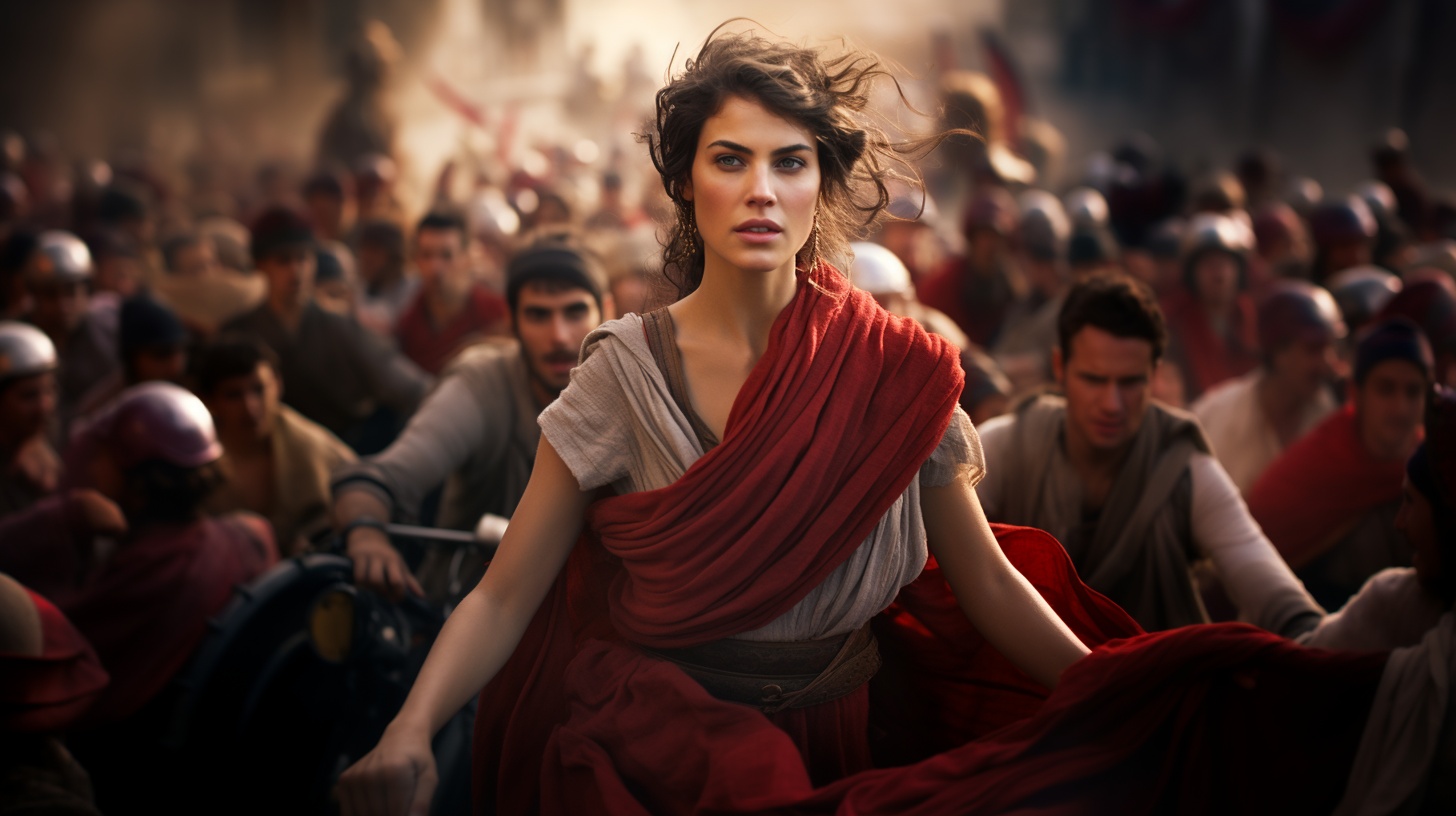
Hypatia of Alexandria
Hypatia in 415CE was savagely killed by Christians, an event which kicked off the dark ages and a reign of terror for next 1000-1600 years, erasing indigenous cultures across the planet. Hypatia was a dedicated gnostikoi (those who strive to know as gods would know) and teacher, supporting the mysteries, and supporter of knowledge and lover of wisdom. Philosophy is love (Philo) of wisdom (Sophia goddess of wisdom). The wisdom of the archaic world has been systematically deleted and covered up which continues today.
Name
ὑπατία (Hypatia)
ὑπατία ἡ Ἀλεξάνδρεῖα (Hypatia of Alexandria)
The name derives from the ancient Greek word hypatos (ὕπατος), which translates to "highest" or "supreme".
In 400 CE, contemporaries in Alexandria would have pronounced ὑ as a French "u" or German "ü" sound. Historically, an initial upsilon always carried a rough breathing mark (ὑ), which originally represented an English "h" sound. The Reality in 400 CE: By the year 400, the "h" sound had dropped out of colloquial and formal Koine Greek speech almost entirely. It was a dead sound. Grammarians still wrote the symbol out of tradition, but her contemporaries wouldn't have actually vocalized a hard "H."
Ancient Greek speakers pronounced her name
hoo-pah-TEE-ahOr later Alexandrian had more of an ee, as in german Uber
hew-pah-TEE-ahOr
heeIt's hard to know exactly
In Media
- John Lamb Lash's book tells the story of Hypatia: Not In His Image (PDF)
- See Table of Contents: Part One: Conquest And Conversion. 1. The Murder of Hypatia / 3
- The film Agora (2009) tells the story (and Murder) of Hypatia
- See below transcript from Magick Magazine, who presents a nice summary of Hypatia.
Transcript from MagickMagazine
Chapter 1: Introduction
Hypatia's life signaled the beginning of the dark ages, and the end of true Hermetics and Neoplatonism. All true magicians who would move forward with their magical practice need to know about Hypatia of Alexandria.
Chapter 2: Who she was
"She was a person who divided society into two parts. Those who regarded her as the oracle of light, and those who looked upon her as the emissary of darkness."Said Albert Hubbard in his "great teachers volume 10".
Who designed the first ever computing machine? e.g. a computer. and when? Who is the first person to teach at university that the earth goes around the sun and not the other way around? Explaining that the earth is not the center of the universe as the Christian church was demanding to be taught at that time. Who first explained the effect that the planet's elliptical geometries have on each other? Which polymath was the most famous alchemist magician astronomer and mathematician of her day? And who was the first official pagan martyred by the newly authorized Roman Christian church? Without her discoveries we would not have NASA, Apple, nor Microsoft. Yes it was all the same person and her name, her name was Hypatia of Alexandria.
Chapter 3: History
Hello everyone I'm Hypatia. In 415CE targeted by her jealous rivals Hypatia of Alexandria became the first public pagan martyr at the hands of the newly formed Christian Church. She was only 42 years old. Just as Leonardo da Vinci has come to symbolize the beginning of the renaissance. Hypatia has come to symbolize the end of ancient science. After Hypatia, came only the chaos and barbarism of the dark ages. Hypatia was a prominent pagan philosopher in the 5th century, who lived in Alexandria the capital of Egypt. She was a respected philosophical and political figure with great beauty and magical ability. In those days if you did one it did not preclude you doing the other. Academics did not split off into specialized areas. To be respected, you had to be a good all-rounder. A polymath, she was the Stephen Hawkings of her day. Hypatia was born in 370CE. Hypatia's father Theon and her mother Euphemia took on the roles of contemporary folk heroes. We know this as they are referred to in several love spells in the greek magical papyri, and let's be honest here, the Greco-Egyptian magic papyri (PGM) are far more ethnically syncretic than just Greek and Egyptian culture. Many of the papyri recovered come from this time. With the persecution that followed Hypatia's death, it is little wonder that the proponents of this form of ceremonial folk magic strove so hard to preserve their wisdoms and they succeeded. Theon, Hypatia's father was a professor of mathematics and astronomy at the museum of Alexandria, which can be called the first true university. Theon was considered one of the most educated men in Alexandria. He raised Hypatia in an environment of thought and great learning. Historians suggest that Theon tried to raise the perfect human. This shows him to be a liberated thinker in an age when Roman policy treated females as a little less than human. Theon and his daughter formed a strong bond. He and Hypatia co-authored several books. Most historians believe that Hypatia surpassed her father's knowledge at a young age. Theon also developed physical routines for Hypatia to ensure that she had a healthy mind and a healthy body. This no doubt accounted for her still being a renowned beauty until her untimely death. Theon instructed Hypatia in the comparative study of religions as Alexandria had remained the world hub of cultural exchange since the time of Alexander the great. He taught her the secrets of public speaking, and the fundamentals of teaching, so that Hypatia became a profound orator, able to influence people with the power of word. Hypatia was indeed an exceptional young woman. She traveled to Athens and Italy impressing all she met with her intellect and beauty. Upon her return to Alexandria, Hypatia became a teacher of mathematics and philosophy in her own right. It is thought that she became the lover of Orestes, the Roman prefect of Egypt, a former student, and a long time friend. However Hypatia never married during her lifetime, and gossip has abounded among historians about her personal life.
Chapter 4: Science
Like Pythagoras, another magical pagan philosopher, Hypatia is mostly remembered for her mathematical work. What is considered to be Hypatia's most significant work was in Algebra. However, Hypatia's main passion was astronomy and astrology, as shown by her tables for the movements of the heavenly bodies in her work "The Astronomical Canon". After her death, conic sections were neglected until Copernius and Galileo then at the beginning of the seventh century Descartes, Newton, and Leibnitz expanded on her work realizing that many natural phenomena such as orbitals are best described by the curves formed by conic sections. Hypatia recognized that the geometric figures formed when a plane passes through a cone, are similar in shape to the orbits of the planets. Based on this work, she invented the machine called the plane astrolabe. It was used for measuring the positions of the stars, planets, and the sun, and to calculate time and the ascendant signs of the zodiac. In short, this is the first astronomical analog computer, and a woman invented it, and made it over 1500 years ago.
The Encyclopedia Britannica describes the plane astrolabe this way:
"the astrolabe or star grasper was a very early hand-held analog computer, a great advance in the ability to find and measure time. An astrolabe contains two models of celestial sphere: the rete, and the tympan. Which can be used together to solve various problems of location and distance, as well as time. For centuries though it had no time keeping capacity of its own. The astrolabe helped in the construction of accurate time measuring devices, such as sundials."
The astrolabe itself never caught on as a popular timepiece, owing in part to the disapproval of the Christian theologians, who saw it as an instrument of the devil.
The letters of Synesius also contained her designs for several scientific instruments including a plane astrolabe. Hypatia also developed an apparatus for distilling water, an instrument for measuring the level of water, and a graduated brass hydrometer for determining the specific gravity or density of a liquid. It is indisputable that Hypatia became enmeshed in Alexandrian politics.
Her student Heyschius the Jew wrote
"donning the ragged philosopher's cloak and making her way through the midst of the city, she explained publicly the writings of Plato or Aristotle or any other philosopher to all who wish to hear the magistrates, will want to consult her first in their administration of the affairs of the city."
Being an influential political figure added to the danger of Hypatia's position in an increasingly Christian city. In 412, Cyril became the patriarch of Alexandria, an intense hostility soon developed between Cyril as the head of the church and Orestes as the head of the state. Because of their very different political ideals, Cyril sought to make it personal and dirty conflict. Because Orestes was also a Hypatia's lover, Cyril publicly accused him of being Hypatia's little lapdog as Mark Antony was to that Ptolemy Cleopatra. Of course he used these diversionary techniques to keep public debate away from his own appalling behavior soon after taking power cyril began persecuting jews and driving thousands of them from the city then despite the vehement opposition of Orestes he turned his attention to ridding the city of the neo-platonists. Hypatia ignored Orestes pleadings and refused to abandon her ideals and convert to Christianity. In march 415CE, a Christian riot was incited by the combined efforts of a small number of pagans and Parabalani (παραβαλάνοι), fanatical monks of the church of Cyril of Jerusalem,
Parabalani (παραβαλάνοι)
They were a brotherhood of lay attendants associated with the church in Cyril of Alexandria, not Cyril of Jerusalem. They originally cared for the sick and handled burials during epidemics, but some ancient sources describe them as becoming a militant force involved in ecclesiastical and political conflicts in Alexandria.
The Cyril associated with the Parabalani and the Cyril connected to Hypatia's death are the same person: Cyril of Alexandria, who served as Patriarch of Alexandria from 412–444 CE.
possibly aided by the Nitrians (Νιτρία).
Nitria (Νιτρία)
Referring to the monks of the Nitria desert region in Egypt.
Edwin Gibbon implied that Cyril was so jealous of Hypatia's influence and popularity that he told his rioting mobs that he had been ordered by god to accept the sacrifice of the virgin who professed the religion of the Greeks. Orestes suggests that the mob was maddened because the Christians were in the middle of fasting for 40 days at length. Therefore they rushed on Hypatia's chariot dragging her from it, she was stripped naked in an attempt to humiliate her. She stood proud and beautiful and declared herself
"always naked before the eyes of the gods",
and that
"only those with things to hide, criminals and evildoers, heavily covered themselves in dark robes and went about in darkness".
This being a reference to the thick robes of the monks, and the dark interiors of the newly converted temple of Serapis Osiris into a Christian church, and the burning of all its ancient books. This clever statement only served to anger the mob further, who then dragged her naked into the church, and they threw her on the altar. Cyril, who had organized this riot, was later canonized and made a saint for this act. Hypatia's murder is described in the writing of the 5th century Christian historian Socrates Scholasticus.
"All men did both reverence, and had her in admiration, for the singular modesty of her mind, wherefore had great spite and envy owed unto her, and because she conferred off and had great familiarity with Orestes, the people charged that she was the cause that the bishop and Orestes were not become friends. To be sure, certain heady rash cockbrains whose guide and captain was Peter, a reader of that church, watched this woman coming from some place or another, they pulled her out of her chariot, they hauled her into the church called Caesareum (Καισάρειον), they stripped her stark naked, they razed the skin, and rendered the flesh of her body with sharp shells, until the breath departed out of her body, they quartered her body, they bring the quarters unto a place called Cinaron, and burn them to ashes."
The myth attached to the legend of her death, is that Cineron is the library of Alexandria, and that the rioting crowd cremated Hypatia on a pyre of the books that she loved so much, while she lived. Moreover, that blaze consumed the whole library in one night.
On a personal note I, as would every other pagan, like to see this Pope apologize for such atrocities against the Pagan community, as he has done for the atrocities committed against the Jews and the holocaust, and thereby release a bit more of the Catholic church's negative karma. What happened after Hypatia's death, the investigation was repeatedly postponed for lack of witnesses, and eventually Cyril proclaimed that
"There was no crime, as Hypatia had made herself immortal in an unholy pact with the devil and was alive and living in Athens, and therefore there had been no mob, and no tragedy, and of course he could not be put on trial for it".
With the spread of christianity, came the reign of chaos. Interest in astrology, mysticism and scientific investigation waned, for fear of personal safety. Dogmatism as a police system, was supreme. The dark ages had begun. Hypatia's brutal murder marked the end of platonic teachings in Alexandria and throughout the roman empire. In 640CE Alexandria was invaded by the Arabs, and what was left of the museum was destroyed.
What can we learn from all of this? These days, paganism is now the fastest growing religion in the world. The wheel turns, and the cycle continues, we however have the opportunity of learning from this past cycle. The acts of gossip, persecution, and slander, always result in self-destruction.
"Go about your own business quietly for whenever we attack another, for whatever reason, we are attacking ourselves"
Quotes from Hypatia.
"All formal dogmatic religions are fallacious and must never be accepted by self-respecting persons as final."
"Reserve your right to think, for even to think wrongly, is better than to not think at all".
"Men will fight for a superstition quite as quickly, as for a living truth, often more so, since a superstition is so intangible you cannot get at it to refute it, but truth is a point of view, and so is changeable."
"Life is an unfoldment, and the further we travel, the more truth we can comprehend to understand the things that are at our door. Is the best preparation for understanding those that lie beyond"
See Also
- Movie: Agora (2009) - (Director: Alejandro Amenábar, Starring: Rachel Weisz, Max Minghella, Oscar Isaac) - A historical drama set in Roman Egypt, concerning a slave who turns to the rising tide of Christianity in the hope of pursuing freedom while falling in love with his mistress, the philosophy and mathematics professor Hypatia of Alexandria.