![[back]](/assets/home_24dp_E3E3E3_FILL0_wght400_GRAD0_opsz24.svg "[back]")
![[search]](/assets/search_24dp_E3E3E3_FILL0_wght400_GRAD0_opsz24.svg "[search]")
Dragon
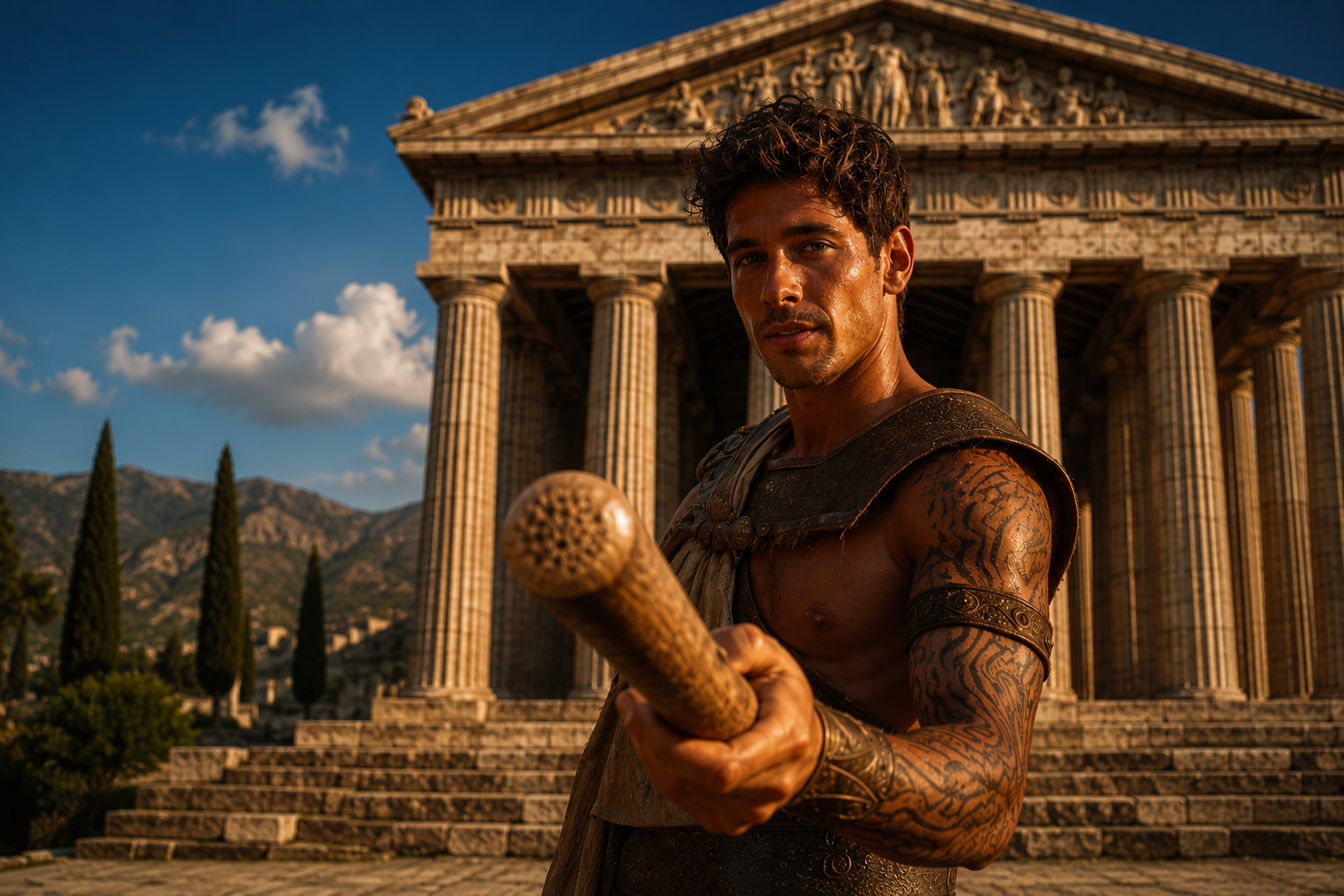
Temple Guardian
See Dragons and Wolves for more info
- Temple Guardian
- Drakon and Drakaina in the Lexicon
- Temple Guardian
- Sources
- Ophis Serpent in Genesis Edem
- See Also
Temple Guardian
A dragon is a guardian of relics and secrets. And in the ancient priesthood, they were guarding the knowledge of the mysteries.
Drakon and Drakaina in the Lexicon
Drakon (δρακον)
A.dragon, serpent, Il.11.39, al.; interchangeable with ὄφις, 12.202, 208, cf. Hes. Th.322, 825, Pi.N.1.40, A.Th.292 (lyr.); “ἀετὸς καὶδ. πολέμια” Arist.HA609a4; perh. a water-snake, ib.602b25.
II. the constellation Draco, Arat.46, al., Man.2.69.
III. a sea-fish, the great weever, Epich.60, Arist.HA598a11, Hp.Vict.2.48.
IV. = κηρύκειον, prob. a wand with a serpent coiled round it, S.Fr.700 (cf. 701).2. serpent-shaped bracelet or necklace, Luc.Am.41.
3. a noose or crossed bandage for the ankle, Heraclas ap.Orib.48.5.1.
4. dragon-standard, Lib.Or.1.144, Them.Or.18.219a, cf. Or. 1.2a: hence, corps of 1,000 men in the Parthian army, Luc.Hist. Conscr.29.
- dragon, serpent
- interchangeable with ophis (ὄφις)
- sea fish, water snake
- Kerukion (κηρύκειον), prob. a wand with a serpent coiled round it
- κηρύκειον (kērykeion) is the herald’s staff - most famously the staff carried by Hermes. The Latin/Roman name for the corresponding object is caduceus.
Drakaina
A.she-dragon, h.Ap.300; of the Erinyes, A.Eu.128; Ἅιδου δ., of the Erinys of Clytaemnestra, E.IT 286; compared with a courtesan, “δ. ἄμεικτος” Anaxil.22.3, cf. Secund. Sent.8.
II. scourge, Ar.Fr.767.
- feminine of drakon (δράκων), she-dragon, female serpent
- compared with a courtesan (a woman understood to have a sexual/erotic social role)
Even if a particular drakaina performed a rite involving sex, nudity, erotic contact, bodily fluids, fertility, initiation, or sexual service, none of that by itself makes porne (πόρνη) the lexical meaning of drakaina (δράκαινα). A priestess can perform a sexual act ritually without “prostitute” being her office, just as performing sacrifice doesn’t make every priest a "butcher".
Comes from derkomai (δέρκομαι) or drakein (δρακεῖν) meaning to see clearly, having sight
A.“δερκέσκετο” Od.5.158: fut. “δέρξομαι” Androm. ap. Gal.6.37: pf. in pres. sense “δέδορκα” Il.22.95, Pi.O.1.94, A.Th.103 (lyr.), etc.; also later Prose, Arist.Phgn.808a4, Luc.Herm.20, Icar.6,14: aor. “ἔδρα^κον” Od. 10.197, A.Eu.34, E.HF951 (never in S.): aor. part. Pass. “δρακείς” Pi. P.2.20, N.7.3; “ἐδέρχθην” A.Pr.547 (lyr.); “δέρχθη” S.Aj.425(lyr.), imper. “δέρχθητε” A.Pr.93 (lyr.), part. “δερχθείς” S.Fr.837; later in med. forms “δέρξατο” APl.4.166 (Even.), “ἐδρακόμην” AP7.224:—see clearly, see, Il.17.675; part. δεδορκώς having sight, opp. τυφλός, S. OT454, cf. El.66: hence, alive, living, “ζῶντος καὶ ἐπὶ χθονὶ δερκομένοιο” Il.1.88, cf. Od.16.439; δρακεῖσ᾽ ἀσφαλές since she lives in safety, Pi.P.2.20; “ἀλαοῖσι καὶ δεδορκόσι” A.Eu.322 (lyr.); “δεδορκότ᾽” S.El.66: freq. with neut. Adj., δεινόν, σμερδαλέονδ., look terrible, Il.3.342, 22.95, etc.; “δεινὰ . . ὀφθαλμοῖςδρακεῖν” A.Eu.34; “φόνια δ.” Ar.Ra.1337 (lyr.): c. acc. cogn., πῦρ ὀφθαλμοῖσι δεδορκώς flashing fire from his eyes, Od.19.446; “Ἄρη δεδορκότων” A.Th.53; but “σκότον δεδ.” blind, E.Ph.377.
2. c. acc. objecti, look on or at, Il.13.86, etc.; “τί . . ἥδιον δρ.;” A.Ag.602; “ἐδέρχθης ὀλιγοδρανίαν” Id.Pr.547; so “δ. εἴςτινα” Hes. Sc.169, E.HF951; “κατά τι” A.Pr.679; descry, perceive, Od.10.197, E. Andr.545; “κτύπον δέδορκα” A.Th.103(lyr.).II. of light, flash, gleam, like the eye, δέδορκεν φάος, φέγγος, Id.N.3.84, 9.41; δεδορκὸς βλέπειν to be keen-eyed, Chrysipp.Stoic.3.198; “τὸ σφοδρὸν καὶ δεδορκός” Plu.2.15b. (Cf. Skt. dadárśa 'have seen', dṛ[snull ]tás 'seen'; prop. not merely of sight, but of sharp sight, cf. A.Supp.409, S.Aj.85.—Poet. and later Prose.)b. look with favour on, of Destiny, Pi.P.3.85.
- to see clearly, having sight
- keen eyed, sharp sight
Temple Guardian
There is certainly an ancient mythic pattern of drakontes (δράκοντες) as guardians - sacred places, springs, trees, treasures, divine objects, etc.-and female serpent figures such as Echidna provide another relevant complex.
Sources
These stories appear to preserve memories/mythologizations of human ritual specialists, especially female guardians of sanctuaries, sacred knowledge, pharmaka, relics, springs, or initiation rites.
Delphi: the δράκαινα at the spring beside the oracle
ἀγχοῦ δὲ κρήνη καλλίρροος, ἔνθα δράκαιναν
κτεῖνεν ἄναξ, Διὸς υἱός, ἀπὸ κρατεροῖο βιοῖο,
ζατρεφέα, μεγάλην, τέρας ἄγριον, ἣ κακὰ πολλὰ
ἀνθρώπους ἔρδεσκεν ἐπὶ χθονί, πολλὰ μὲν αὐτούς,
πολλὰ δὲ μῆλα ταναύποδ᾽, ἐπεὶ πέλε πῆμα δαφοινόν.
And nearby was a beautiful-flowing spring, where the lord,
son of Zeus, killed a drakaina with his strong bow,
greatly nourished, huge, a wild portent/creature…
Allen and Sikes’ classical commentary explicitly discusses the dragon as representing an earlier Pythian cult, probably associated with Gaia; Aeschylus later calls Gaia Delphi’s πρωτόμαντις, “first oracle/seer.”
Basically: Male theoi (Apollo) establishes his oracle by killing the female guardian associated with the previous sacred place.
Thebes: δράκων guarding the sacred spring of Ares
Cadmus needs sacred water in order to sacrifice to Athena. He sends men to the κρήνη Ἄρεως, “spring of Ares.”
A Drakon (δράκων) guards it and kills them; Cadmus kills the Drakon (δράκων).
Apollonius Rhodius preserves the same tradition considerably earlier and explicitly describes the creature as:
βουλόμενος δὲ Ἀθηνᾷ καταθῦσαι τὴν βοῦν, πέμπει τινὰς τῶν μεθ᾽ ἑαυτοῦ ληψομένους ἀπὸ τῆς Ἀρείας κρήνης ὕδωρ· φρουρῶν δὲ τὴν κρήνην δράκων, ὃν ἐξ Ἄρεος εἶπόν τινες γεγονέναι, τοὺς πλείονας τῶν πεμφθέντων διέφθειρεν. ἀγανακτήσας δὲ Κάδμος κτείνει τὸν δράκοντα, καὶ τῆς Ἀθηνᾶς ὑποθεμένης τοὺς ὀδόντας αὐτοῦ σπείρει.
Wishing to sacrifice the cow to Athena, he sends some of those with him to obtain water from the spring of Ares. But a drakōn, guarding the spring, which some said had been born from Ares, destroyed most of those who had been sent. And Cadmus, becoming angry, kills the drakōn, and, at Athena’s instruction, sows its teeth.
And there is a consequence for killing it: Cadmus must serve Ares in expiation. Apollodorus says:
Κάδμος δὲ ἀνθ᾽ ὧν ἔκτεινεν ἀίδιον ἐνιαυτὸν ἐθήτευσεν Ἄρει· ἦν δὲ ὁ ἐνιαυτὸς τότε ὀκτὼ ἔτη.
And Cadmus, because of the killing he had committed, served Ares for an aidios year; and that year was then eight years.
The Drakon (δράκων) belongs within Ares’ sacred sphere
Colchis: δράκων literally guarding a divine relic in a sacred grove
A relic-guardian example.
τοῦτο δὲ ἐν Κόλχοις ἦν ἐν Ἄρεος ἄλσει
κρεμάμενον ἐκ δρυός
ἐφρουρεῖτο δὲ ὑπὸ δράκοντος ἀύπνου.
And this [the Golden Fleece] was in Colchis, in the sacred grove of Ares,
hanging from an oak,
and it was guarded by a sleepless drakōn.
- ἐφρουρεῖτο, “was guarded.”
Jason cannot simply defeat the guardian and take the sacred object. Medea possesses the pharmacological/ritual knowledge necessary to overcome the guardian. In Apollodorus’ continuation, she uses her pharmaka φάρμακα to put the guarding δράκων to sleep and takes the fleece.
Hesperides: δράκων + female guardians jointly guard the divine object
This one is even more interesting because the δράκων and female sacred guardians perform the same guarding function together. Guarding the sacred/divine fruit.
ἃ Διὶ Γῆ γήμαντι Ἥραν ἐδωρήσατο.
ἐφύλασσε δὲ αὐτὰ δράκων ἀθάνατος,
Τυφῶνος καὶ Ἐχίδνης...
...μετὰ τούτου δὲ Ἑσπερίδες ἐφύλαττον,
Αἴγλη Ἐρύθεια Ἑσπερία Ἀρέθουσα.
[The apples] which Gaia gave to Zeus when he married Hera.
And an immortal drakōn guarded them,
[offspring] of Typhon and Echidna......and together with it the Hesperides guarded them:
Aigle, Erytheia, Hesperia, Arethusa.
Echidna herself: half nymph-woman, half enormous serpent
295 ἡ δ’ ἔτεκ’ ἄλλο πέλωρον ἀμήχανον, οὐδὲν ἐοικὸς
θνητοῖς ἀνθρώποις οὐδ’ ἀθανάτοισι θεοῖσι,
σπῆι ἔνι γλαφυρῷ, θείην κρατερόφρον’ Ἔχιδναν,
ἥμισυ μὲν νύμφην ἑλικώπιδα καλλιπάρηον,
ἥμισυ δ’ αὖτε πέλωρον ὄφιν δεινόν τε μέγαν τε
300 αἰόλον ὠμηστήν, ζαθέης ὑπὸ κεύθεσι γαίης.
ἔνθα δέ οἱ σπέος ἐστὶ κάτω κοίλῃ ὑπὸ πέτρῃ
τηλοῦ ἀπ’ ἀθανάτων τε θεῶν θνητῶν τ’ ἀνθρώπων,
ἔνθ’ ἄρα οἱ δάσσαντο θεοὶ κλυτὰ δώματα ναίειν.
ἡ δ’ ἔρυτ’ εἰν Ἀρίμοισιν ὑπὸ χθόνα λυγρὴ Ἔχιδνα,
305 ἀθάνατος νύμφη καὶ ἀγήραος ἤματα πάντα.
τῇ δὲ Τυφάονά φασι μιγήμεναι ἐν φιλότητι
δεινόν θ’ ὑβριστήν τ’ ἄνομόν θ’ ἑλικώπιδι κούρῃ·
ἡ δ ὑποκυσαμένη τέκετο κρατερόφρονα τέκνα.
Ὄρθον μὲν πρῶτον κύνα γείνατο Γηρυονῆι·
Picking from the above:
divine, strong-minded Echidna,
half a nymph, flashing-eyed, fair-cheeked,
and half again a monstrous serpent, terrible and great…
beneath the hidden places of the sacred earth…
an immortal nymph, ageless all her days.
- Divine (theoi) Nymph + serpent residing beneath the recesses of the sacred earth (gaia).
- Immortal (athanatos).
There is an ancient genealogical network radiating outward from Echidna (Ἔχιδνα), and Heracles repeatedly confronts members of it.
- Greek authors make Echidna (Ἔχιδνα) the mother or ancestral source of a cluster of serpent/guardian creatures, and Heracles’ labors repeatedly bring him into conflict with that same family
- She is half nymph, half serpent
- She then produces offspring with Typhon (Τυφάων)
- Orthos - Echidna’s two-headed dog; Heracles kills him while taking Geryon’s cattle
- Sphinx
- Nemean Lion - Heracles kills it as his first labor.
- Cerberus - explicitly Echidna’s son; Heracles descends into Hades and subdues/removes him
- Hydra of Lerna - explicitly Echidna’s daughter; Heracles kills it as his second labor
- Chimaira
- Ladon / Hesperidean δράκων - later genealogical tradition makes the guardian δράκων another offspring of Typhon and Echidna; Heracles must overcome the guardian in the Apples of the Hesperides episode.
- Orthos - Echidna’s two-headed dog; Heracles kills him while taking Geryon’s cattle
What these creatures do: They are frequently boundary guardians.
- Cerberus guards the boundary of Hades.
- Orthos guards Geryon’s cattle.
- Ladon guards Hera’s divine apples/tree.
- Hydra inhabits the sacred/watery Lernaean landscape.
- The Nemean Lion controls a territory.
- In the wider drakon (δράκων) complex (not all Echidna's children) - the same function occurs at Delphi, the spring of Ares at Thebes, and the Fleece at Colchis.
Drakon (δράκων) / Drakaina (δράκαινα) as a guardian of boundary, spring, grove, tree, sacred object, underworld entrance, treasure, where the hero must overcome guardian to gain access.
These stories appear to preserve memories/mythologizations of human ritual specialists, especially female guardians of sanctuaries, sacred knowledge, pharmaka, relics, springs, or initiation rites.
Related Terms:
- serpent (ophis), dragon (drakon, drakaina), viper (echidna)
- waters, blood (hyma), rivers, (dark) harbor, cup
- immortal (athanatos), oracle
Ophis Serpent in Genesis Edem
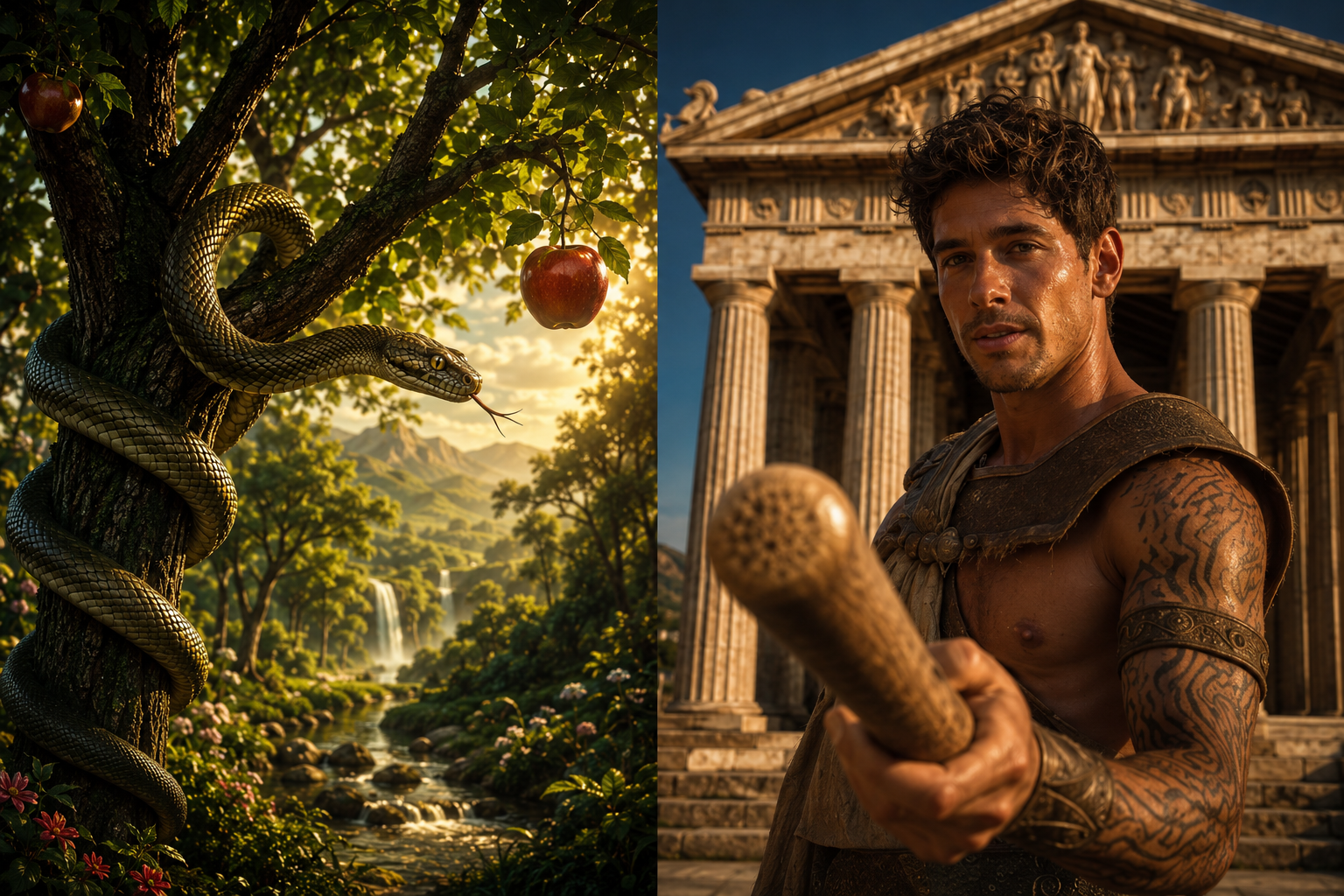
the Genesis Ophis is the Drakon temple guardian
The writers of the Greek New Testament,
who studied exclusively the Greek Septuagint,
knew that...
The Ophis (serpent) in the Genesis Paradise account was indeed a Drakon (δρακον):
καὶ ἐβλήθη ὁ δράκων ὁ μέγας, ὁ ὄφις ὁ ἀρχαῖος, ὁ καλούμενος Διάβολος καὶ ὁ Σατανᾶς, ὁ πλανῶν τὴν οἰκουμένην ὅλην· ἐβλήθη εἰς τὴν γῆν, καὶ οἱ ἄγγελοι αὐτοῦ μετ᾽ αὐτοῦ ἐβλήθησαν.
And the great drakon was thrown down, the ancient ophis, the one called Diabolos and Satanas, the one causing the whole inhabited world to wander; he was thrown into the earth, and his messengers (angeloi) were thrown with him.
Here in Revelation, the apostles are telling us that "the ancient ophis" is "the great drakon".
We know what wandering (πλανῶν) means...
The dragon is the temple guardian, guardian of relics and secrets. The dragon will initiate you.
The writers here are salty that the drakon was initiating the public.
People in the cult do call the Ophis "diabolos" or "satan" (though Genesis doesn't), people do conflate them.
- diabolos - diabolical trickster (away from what's approved by the cult)
- satanas - catchall for any unapproved deity, paganism, nature (which is naturally opposed to the unnatural cult)
Messengers (Angeloi) in the Ancient Greek language means "messengers" (literal Greek translation), which we can take to be the drakon's (temple guardian's) attendants...
he was thrown into the earth, refers to the Morning Star / Eosphorus story in the Greek Septuagint.
Later that Morning Star is translated into Latin as Lucifer.
Implies that the Eosphorus/ Lucifer (Morning Star) was a Drakon as well... the Drakon is a dawn bringer.
We see torch-bearer (medea, hecate, ceres, etc; guidance in the rite; e.g. eleusis torch carvings) and dawn bringer traditions (TODO: give examples) in the ancient Hellenic world.
See Genesis
See Also
- Dragons and Wolves for more info