![[back]](/assets/home_24dp_E3E3E3_FILL0_wght400_GRAD0_opsz24.svg "[back]")
![[search]](/assets/search_24dp_E3E3E3_FILL0_wght400_GRAD0_opsz24.svg "[search]")
Dr DCA Hillman Biography
and other relevant information...
Table of Contents
- Pronunciation of Ammon
- Education
- Research focus
- Lineage
- Bio
- Beliefs
- The Tattoos
- Does Dr Hillman Horrify You?
- Frequently Asked Questions
- Gallery
- Articles Published About Dr Hillman
- Publications
- The Chemical Muse
- Original Sin
- Hermaphrodites Gynomorphs and Jesus
- Representations of Pharmacy in Roman Literature from Cato to Ovid (doctoral dissertation)
- The Salamander as a Drug in Nicander’s Writings
- Drugs, Suppositories, and Cult Worship in Antiquity
- Ancient Mystery Initiation - Toxic Priestesses and Vaginal Communion
Pronunciation of Ammon
AW-mun (AW is like father; mun is like sun)
Watch Dr Hillman pronounce his own name
Education
Dr. D. C. Ammon Hillman earned his Bachelor’s, Master’s, and Ph.D. in Classics and his master’s degree in Bacteriology.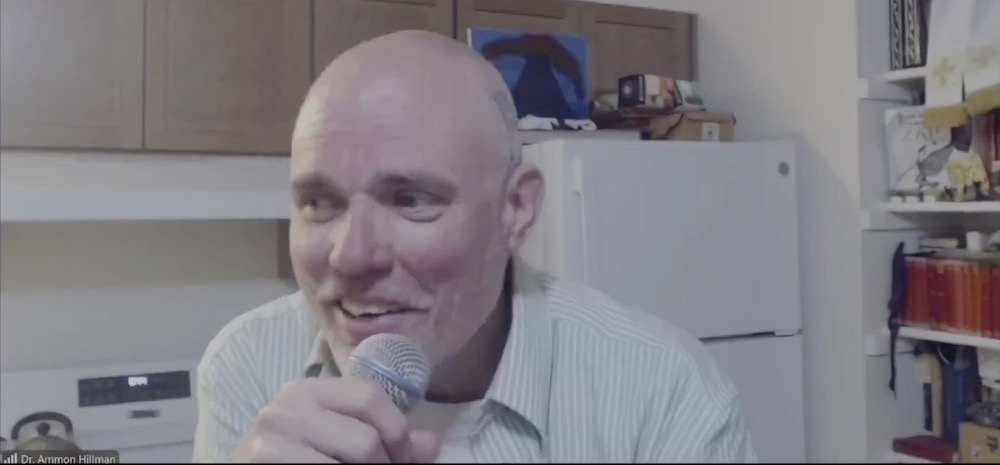
Research focus
He bridges the divide between the sciences and humanities, using his extensive philological experience and classical and pharmacological/physiological education to shed light on the Bible and pre-christian ancient priesthood in new ways. He reads Greek literary, medical, ritual, and biblical corpora philologically, connecting them rather than isolating ‘the Bible.’ His research has provoked discussions around ancient Mystery rites and the linguistic history of biblical texts.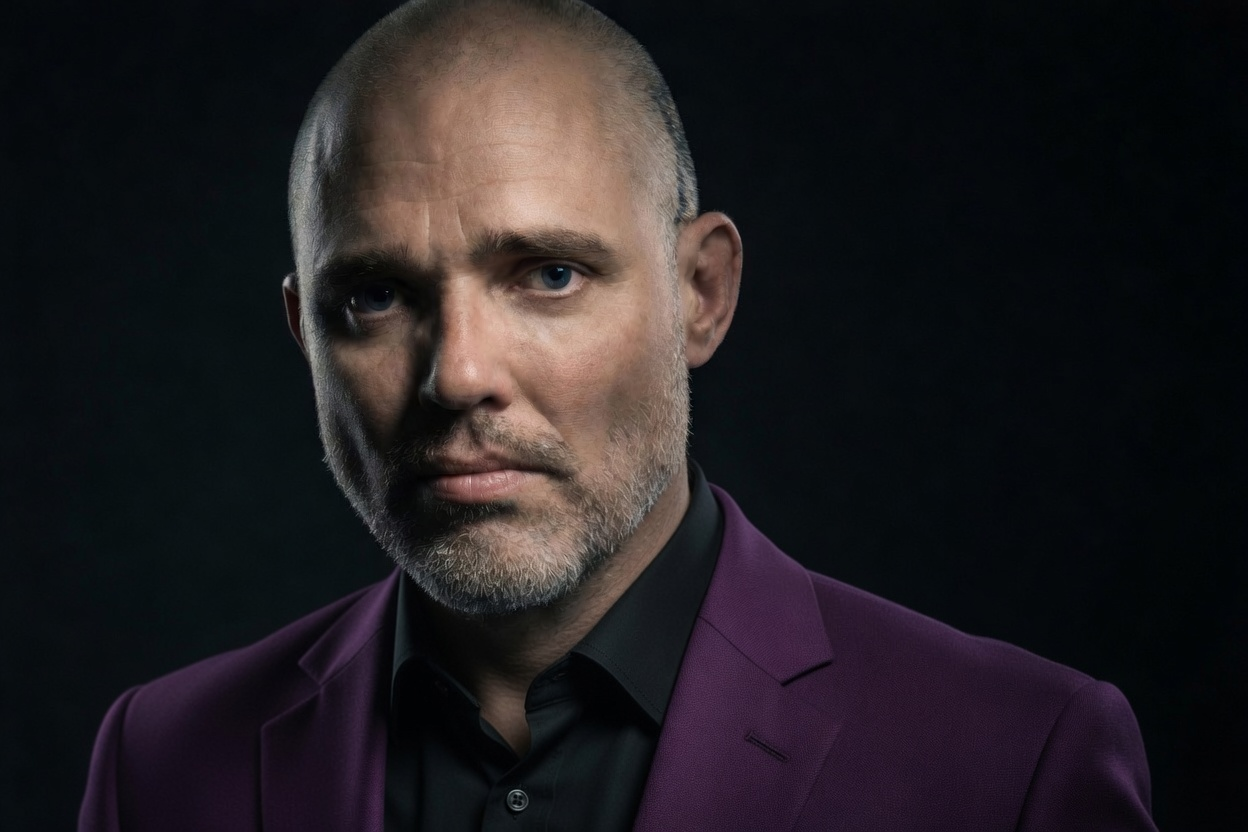
Lineage
His doctoral work was supervised by the late, great Dr. John Scarborough — a foremost authority on ancient Greek pharmacology — and he is a colleague of Dr. Carl A. P. Ruck.
Bio
From LadyBabylon Youtube channelAs always... Hail Satan!
From MacMillan (likely circa ~2008 when chemmuse book was published)
From SoBrief
- D.C.A. Hillman is a scholar with a unique background, holding a Ph.D. in Classics and a master's in Bacteriology.
- This combination allows him to analyze ancient medical texts with a fresh perspective.
- Hillman's work on drug use in ancient civilizations faced opposition during his doctoral studies, leading him to publish his findings independently.
- He argues that recreational drug use was widespread and culturally significant in ancient Greece and Rome, challenging conventional academic interpretations.
- Hillman's research explores the intersection of medicine, philosophy, and social norms in antiquity, offering a controversial but thought-provoking view of Western civilization's roots.
From Wikipedia
Early Life:
David Charles Ammon Hillman was born to Baptist parents in Tucson, Arizona. By the time Hillman was 17, he was teaching Sunday school and preaching at a mission, as well as studying Koine Greek and Latin. He completed an undergraduate degree in classics at the University of Arizona, and spent three months at the Dallas Theological Seminary. His exposure to classical authors such as Aristotle led him to becoming an apostate. He later pursued a master's degree in animal science, but abandoned it.
Hillman then went on to attend the University of Wisconsin–Madison, earning a master's degree in bacteriology, as well as a Ph.D. in classics with a specialization in Ancient Greek and Roman pharmacy. During this period, he spent a lot of time going over medical texts in Latin and Greek, coming across evidence that the Greeks knew about herbal concoctions such as opium, and that they used these substances recreationally.
While writing his classics dissertation at UW–Madison, Hillman was forced by his "overly conservative" advisors to delete an entire chapter he wrote on the widespread recreational drug use in the ancient world. This event inspired him to write his first book, The Chemical Muse: Drug Use and the Roots of Western Civilization in 2008. The book describes how Ancient Greeks and Romans used herbal substances for healing and creative purposes.
2008–2015: Career beginnings and firing from St. Mary's University of Minnesota
Hillman began teaching as an adjunct professor at Saint Mary's University of Minnesota, becoming a popular instructor among the students there. In the autumn of 2015, he was hired by the university's theater professor, Judy Myers, to write an original translation of the Ancient Greek tragedy Medea. In the production, which Hillman described as "authentic" and written to "maintain the historical integrity of the play," phallic ancient world objects known as fascina were used as props by cast members. The school's administrators found the play's message, as well as the use of the fascina, uncomfortable, banning the use of the objects as well as later terminating Hillman from his position entirely. Many students, as well as fellow professors, protested the firing, claiming that the school was actively censoring Hillman's freedom of speech.
2024: Danny Jones Podcast:
Hillman appeared on the Danny Jones Podcast on May 20, 2024, discussing what the ancient sources said about Christianity and the life of Jesus. His analysis reveals that the Septuagint was not a translation, but indeed the true original source of the Bible, and was mistranslated into the Hebrew language. Hillman claimed that, using his extensive knowledge of the Ancient Greek language and pharmaceutical terms, the Septuagint actually reveals that the Twelve Apostles were all prepubescent teenagers, and that Jesus was trafficking them for ritualistic and drug-related purposes. A particular occurrence he finds interest in is within the Gospel of Mark, where it is described that a naked youth, seemingly wearing nothing but a linen garment, is seen running away naked from the site of Jesus' arrest in the Garden of Gethsemane. Hillman claims that what the Ancient Greek actually describes is that the naked youth was not wearing a linen garment, but instead a medicated bandage around his penis, from where Jesus was extracting an antidote to the Dipsas venom he had taken recreationally. He further claims that Jesus actually died of an overdose of this venom during his crucifixion, as the antidote was interrupted by the arrest and thus unavailable to save his life.
Beliefs
From The Mystery
Knowing yourself is a hell of a lot better than believing in empty promises, lies, thievery, obfuscation, infidelity, which by the way should be punished.
Dr Hillman stated his beliefs in the Polarity interview. Wisdom, Evidence, the divinity of nature.
Finally, is he a satanist? No
- The first question Danny Jones ever asked Ammon was "are you a Satanist?" and Ammon's answer was something like "Fuck no. I can't stand those people!" ...
The Tattoos
Generally: In antiquity a mark pricked into the skin — a stigma (στιγμα) — named the one you belonged to. Herodotus describes the sanctuary of Herakles at the Canopic mouth of the Nile, where a slave who took the sacred marks (στιγματα ιρα) passed into the god’s ownership and could not be reclaimed (Histories 2.113). Ptolemy IV is said to have had Alexandrian Jews branded with the ivy leaf of Dionysos (3 Maccabees 2:29). Paul ends a letter insisting he carries in his body the marks of Jesus, τα στιγματα του Ιησου (Galatians 6:17). The Apocalypse puts the mark where it cannot be hidden: the name written upon the forehead (Revelation 14:1; cf. 13:16).
“We shave our head as a sign of mourning. Whose death are we mourning? Jehova’s.” - Dr D.C.A. Hillman
To be marked was to be dedicated, and the name you carried was the name of the one who held you.
Specifically: Dr. Hillman carries Medea’s name on his head in three scripts.
| "Medea" in Etruscan | "Medea" in Ancient Greek | "Medea" in Linear B |
|---|---|---|
 |  |  |
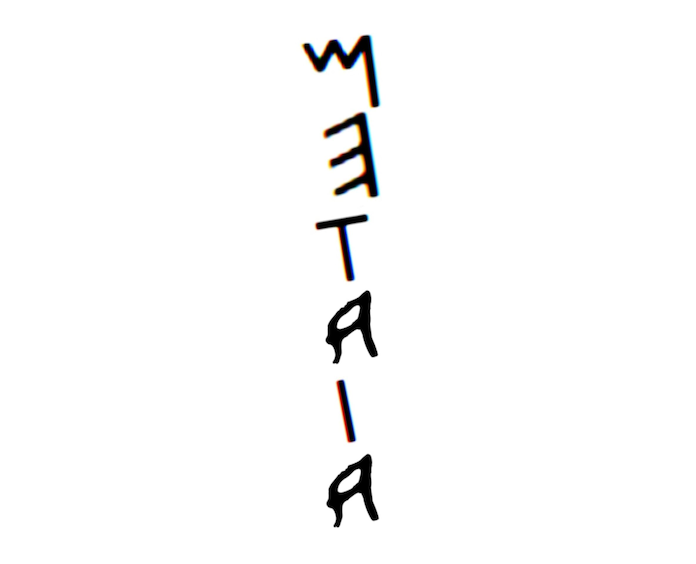 | 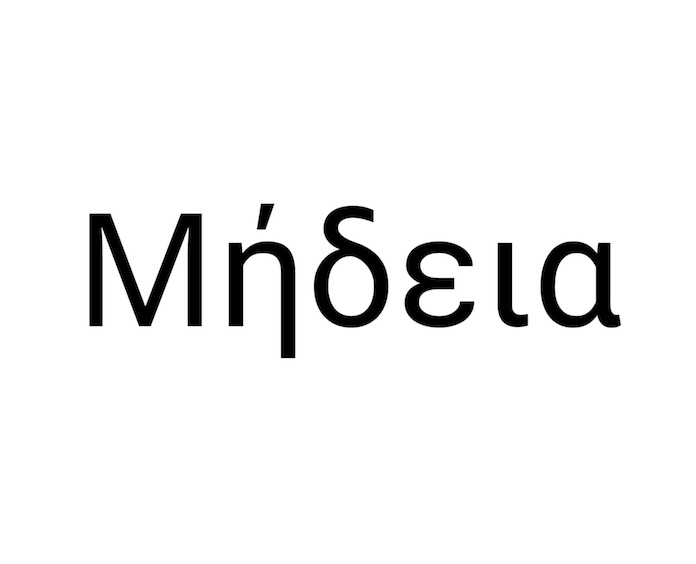 | 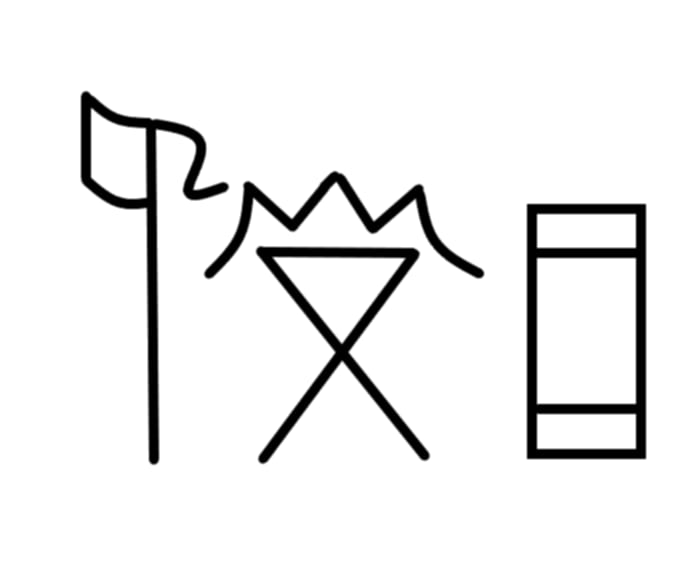 |
| 𐌌𐌄𐌕𐌀𐌉𐌀 me ta ay a | Μήδεια may dee ah | 𐀕𐀆𐀊 me de ja |
| Arm Tatoos | Back Tattoos |
|---|---|
 |  |
| Πρίηπος Ερινύς ?όμιος Priapos Erinus ?omios |
Does Dr Hillman Horrify You?
If so, then here's what he has to say to you[link]
"Ammon horrifies me!"
Yes, I should!
Because your entire system of bullshit... is about to fall!
And you're watching it!
And there's nothing you can do!
Nothing.
Fantastic, I love it, people!
Frequently Asked Questions
- see the FAQ
Gallery

Dr DC Ammon Hillman - Teaching

Dr DC Ammon Hillman - Tattoo
Articles Published About Dr Hillman
- Ammon Hillman is Unstoppable - Jul 9, 2024
- Everybody Musta Got Stoned - Oct 31, 2008
- Satisfying the Flame of Desire: Marijuana Priestesses, Drugs & the Cycle of Life - Cannabis Culture - 2012
- Is a Phallus a Firing Offense? National Coalition Against Censorship - 2015
- Silenced at Saint Mary's: Censorship & Academic Freedom After a Firing - FIRE - 2016
- Unveiling the Sacred Lies - Medium - Life in the Bliss Lane - Oct 4, 2024
- Reconsidering Christ: Dr. Ammon Hillman's Research - Bishop Ray Taylor PhD - Substack - May 22, 2025
- Eyes Wide Open - Iconoblast - Substack - Feb 09, 2025
- Why Dr. Ammon Hillman's Research Resonates - Beyond the Rabbit Hole - Substack - Feb 21, 2025
- The Gorgonic Magic of Medea - Jason Reza Jorjani - Substack - Feb 23, 2025
- Ammon Hillman - Wikipedia
Publications
- See also, Dr DCA Hillman's Books At Amazon
The Chemical Muse
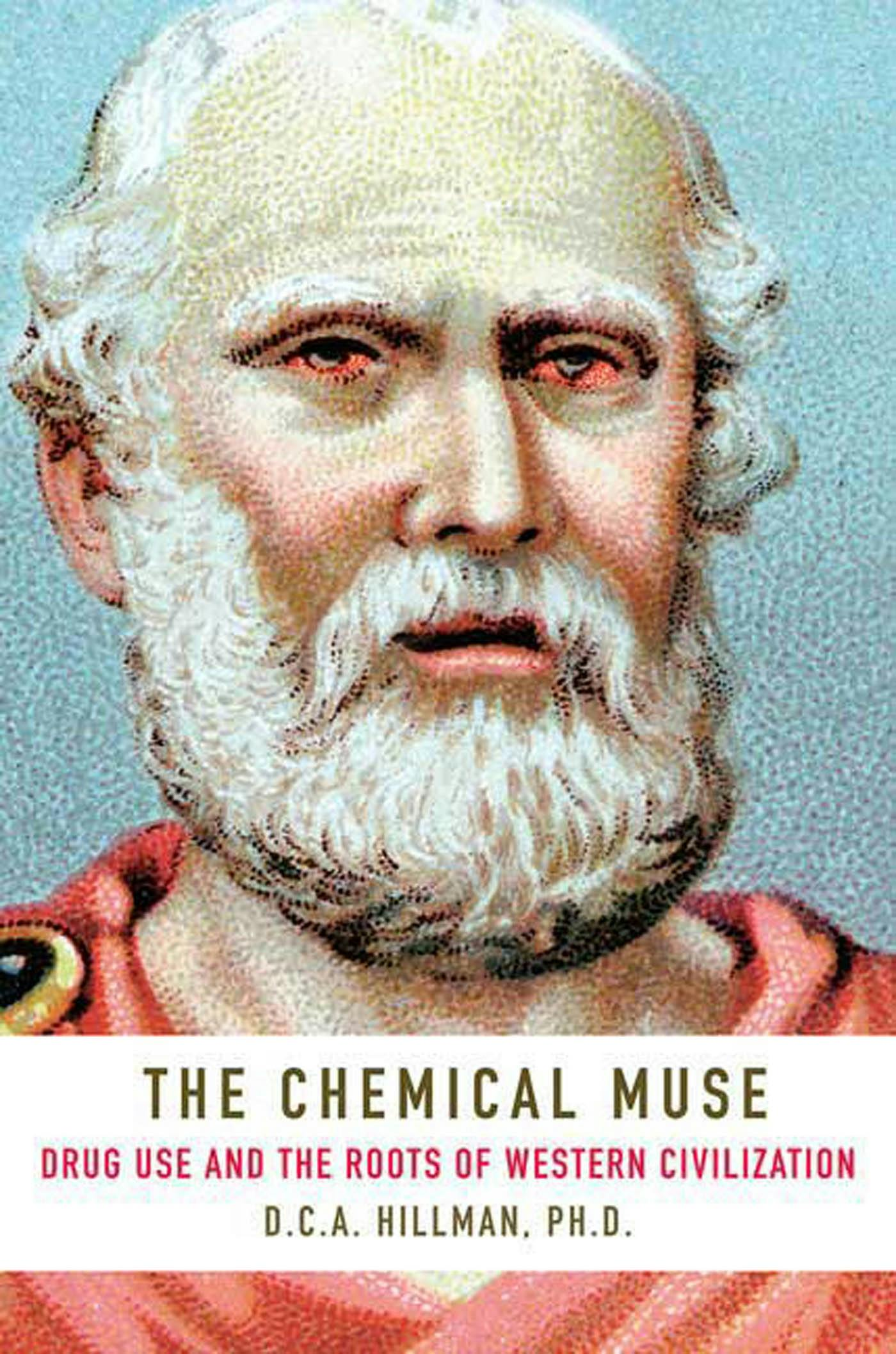 | The Chemical Muse: Drug Use and the Roots of Western Civilization (Macmillan, 2008) ISBN 9781466882294 - Read on archive.org |
- "The last wild frontier of classical studies." ---The Times (UK)
The Chemical Muse uncovers decades of misdirection and obfuscation to reveal the history of widespread drug use in Ancient Rome and Greece. In the city-states that gave birth to Western civilization, drugs were an everyday element of a free society. Often they were not just available, but vitally necessary for use in medicine, religious ceremonies, and war campaigns. Their proponents and users existed in all classes, from the common soldier to the emperor himself.
Citing examples in myths, medicine, and literature, D. C. A. Hillman shows how drugs have influenced and inspired the artists, philosophers, and even politicians whose ideas have formed the basis for civilization as we know it. Many of these ancient texts may seem well-known, but Hillman shows how timid, prudish translations have left scholars and readers in the dark about the reality of drug use in the Classical world.
Hillman's argument is not simply "pro-drug." Instead, he appeals for an intellectual honesty that acknowledges the use of drugs in ancient societies despite today's conflicting social mores. In the modern world, where academia and university life are often politically charged, The Chemical Muse offers a unique and long overdue perspective on the contentious topic of drug use and the freedom of thought." - “The role of psychoactive drugs has been airbrushed out of the conventional picture of Western civilization. The academics who have created this drug-free Greco-Roman world have found their nemesis in Dr. Hillman's The Chemical Muse. With clarity and directness the author gives us back a lost chapter of our Classical heritage and by doing so restores our understanding of this past.” —Richard Rudgley, author of Lost Civilizations of the Stone Age
- “In addition to demonstrating the importance of medicinal botanicals and chemicals in alleviating the sufferings of humanity in the ancient Greco-Roman world, Dr. Hillman unveils the role that many of them played as recreational drugs, not for the lunatic fringes of society, but as sources of knowledge and religious sacraments by the leading artists, thinkers, and politicians, central to the very formation of what we admire and enshrine as the Classical tradition. The Chemical Muse inspired democracy itself and the greatest minds of antiquity.” —Carl A. P. Ruck, author of Sacred Mushrooms: The Secrets of Eleusis
- “David Hillman has given us a penetrating insight into our permanent romance with altered consciousness. This important work is a myth-buster.” —Mike Gray, author of Drug Crazy and The China Syndrome
Original Sin
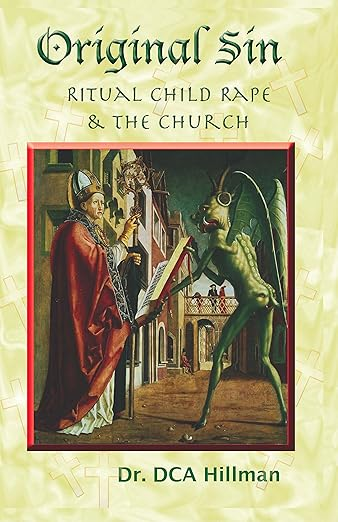 | Original Sin: Sex, Drugs, and the Church (Ronin Publishing, 2012) ISBN 1-57951-165-1 - Read on archive.org |
Hermaphrodites Gynomorphs and Jesus
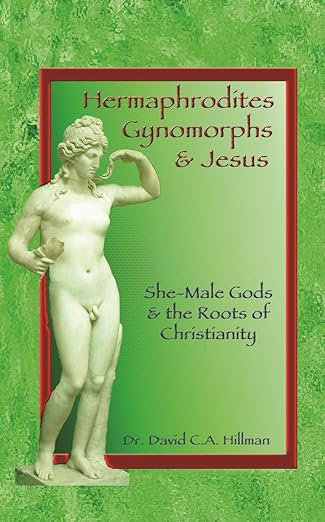 | Hermaphrodites, Gynomorphs and Jesus: She-Male Gods and the Roots of Christianity (Ronin Publishing, 2014) ISBN 1-57951-185-6 - Read on archive.org |
Representations of Pharmacy in Roman Literature from Cato to Ovid (doctoral dissertation)
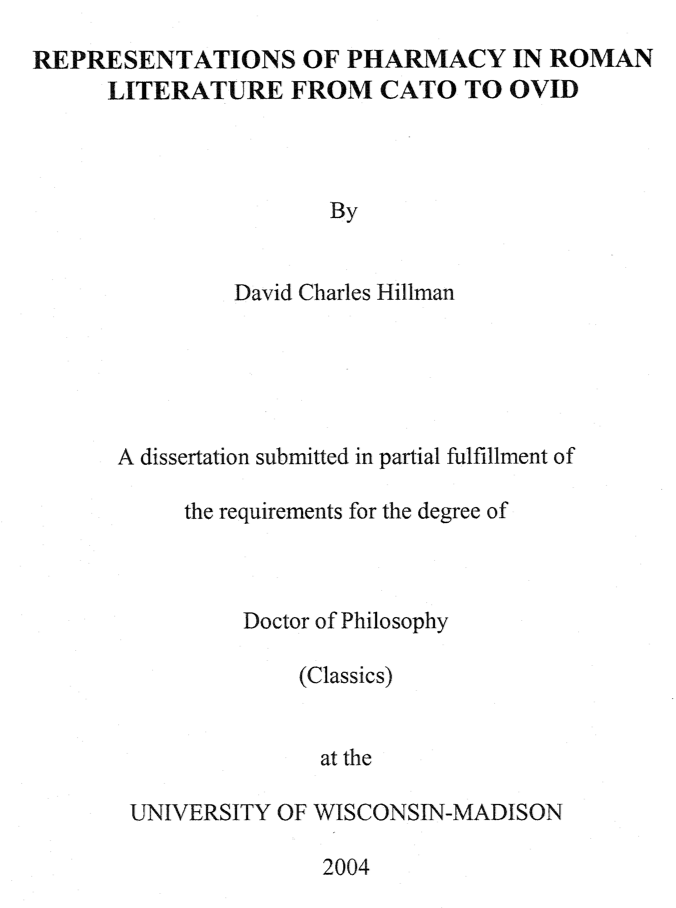 | Representations of Pharmacy in Roman Literature from Cato to Ovid (doctoral dissertation) - Hillman, D. C. A. (2004). Representations of Pharmacy in Roman Literature from Cato to Ovid [Doctoral dissertation]. University of Wisconsin–Madison. - Read on archive.org |
The Salamander as a Drug in Nicander’s Writings
- The Salamander as a Drug in Nicander’s Writings · journal article Hillman, D. C. A. (2001). “The Salamander as a Drug in Nicander’s Writings.” Pharmacy in History 43(2/3).
- Read on archive.org
Drugs, Suppositories, and Cult Worship in Antiquity
- Drugs, Suppositories, and Cult Worship in Antiquity - Toxicology in Antiquity, ch. 23, Hillman, D. C. A. “Drugs, Suppositories, and Cult Worship in Antiquity.” In P. Wexler (ed.), Toxicology in Antiquity, ch. 23. Elsevier / Academic Press.
- Read on archive.org
- Full text
Ancient Mystery Initiation - Toxic Priestesses and Vaginal Communion
- Ancient Mystery Initiation Toxic Priestesses and Vaginal Communion · Toxicology in Antiquity, ch. 26, Hillman, D. C. A. “Ancient Mystery Initiation: Toxic Priestesses and Vaginal Communion.” In P. Wexler (ed.), Toxicology in Antiquity, ch. 26. Elsevier / Academic Press.
- Read on archive.org
- Full text