![[back]](/assets/home_24dp_E3E3E3_FILL0_wght400_GRAD0_opsz24.svg "[back]")
![[search]](/assets/search_24dp_E3E3E3_FILL0_wght400_GRAD0_opsz24.svg "[search]")
Amazon Women
The Scythian huntress, Amazon woman of Greek legends, lineage of Medea and oracular priesthood. Arrow poison technology evolved to medicine and spiritual awakening
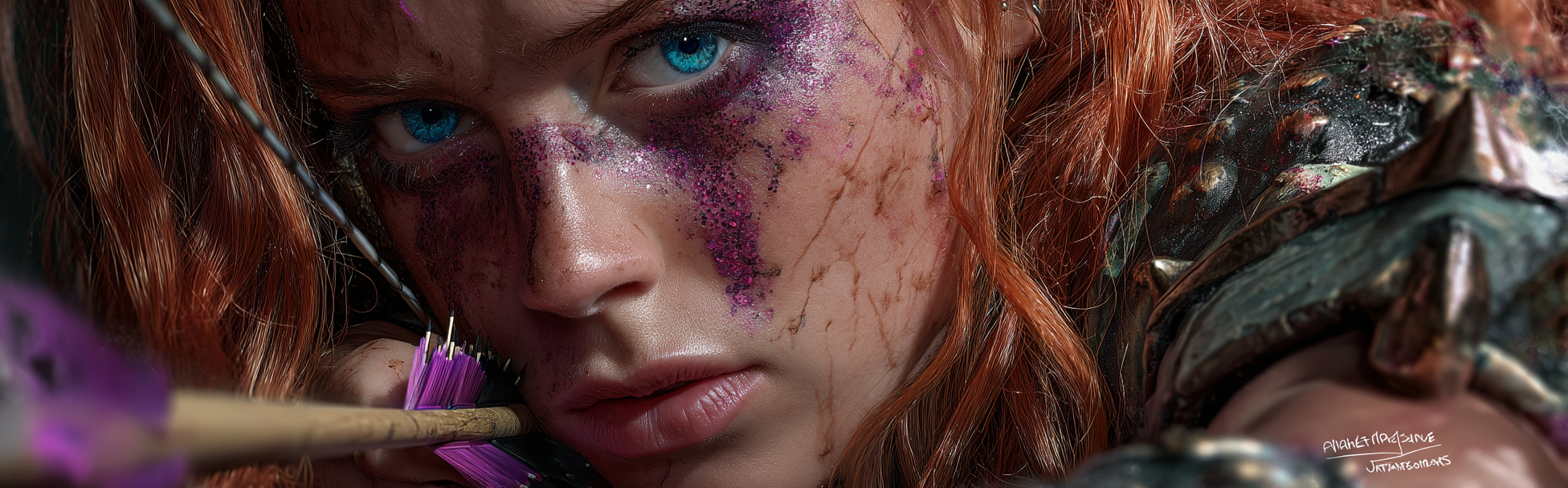
The Amazons, a legendary tribe of female warriors in Greek mythology, were often associated with the region of Scythia, located in Eastern Europe and Central Asia. Specifically, their homeland was thought to be near the Black Sea.
Scythia:
Ancient Scythia was a vast territory spanning from the Black Sea in the west to the Altai Mountains in the east, covering much of the Pontic-Caspian Steppe and the Kazakh Steppe.Black Sea:
In Greek myths, the Amazons were often placed near the southern shores of the Black Sea, particularly in an area called Pontus.Herodotus and Bacchylides:
The historian Herodotus and the poet Bacchylides both placed the Amazon homeland in Scythia, specifically in the region around the Thermodon River, which is thought to be the modern-day Terme River.Modern-day location:
This region corresponds to modern-day southern Ukraine and parts of western KazakhstanScalp 3 men before given mating rights
Before an Amazon woman could be called woman, she needed to scalp 3 men.Dr Hillman says [link]
They have a mobile territory / land.
How do you prove that you defended your land?
You get a scalp. (Something very personal)
Scalp shows you the ethnicity, hints of gender. You can tell a lot from a scalp.
She takes those scalps back home, as proof.
3 scalps are required to mate (mating rights - required before fornication).
Why do you think they bred the way that they bred?
The Amazonian tribe of bowhunting women used their ios coated arrows to freeze men so they could procreate, the venoms in the ios caused priapism. Allowed to procreate once 3 scalps obtained. They kept the ios in their hair to drag arrowheads through before firing their shot.
The legendary amazonian women didn’t allow men to live with them, were horse riders and bow hunters, users of arrow poisons. would drag the arrow through snake venom salve they had smeared in their hair, chasing men and shooting them and freezing them with their venom from their hair, after which she could do what she wanted. ending in scalping him. ultimately after 3 scalps she was by rule old enough to have offspring… which would be obtained in the same way… that arrow poison was viagra. caused satyriasis / priapism…
Scythian use of human skin
The ancient Scythians, a nomadic people known for their gold and warrior ways, used human skin for leather, a new study finds.
While Herodotus’ historical accounts have often faced criticism for blending fact and folklore, in this instance, the scientific validation of the Scythians’ use of human skin for leather items brings his ancient words into stark and horrifying reality.
Every time archaeologists think "Herodotus was probably exaggerating this grotesque detail," they find out he was underselling it. The man had restraint.
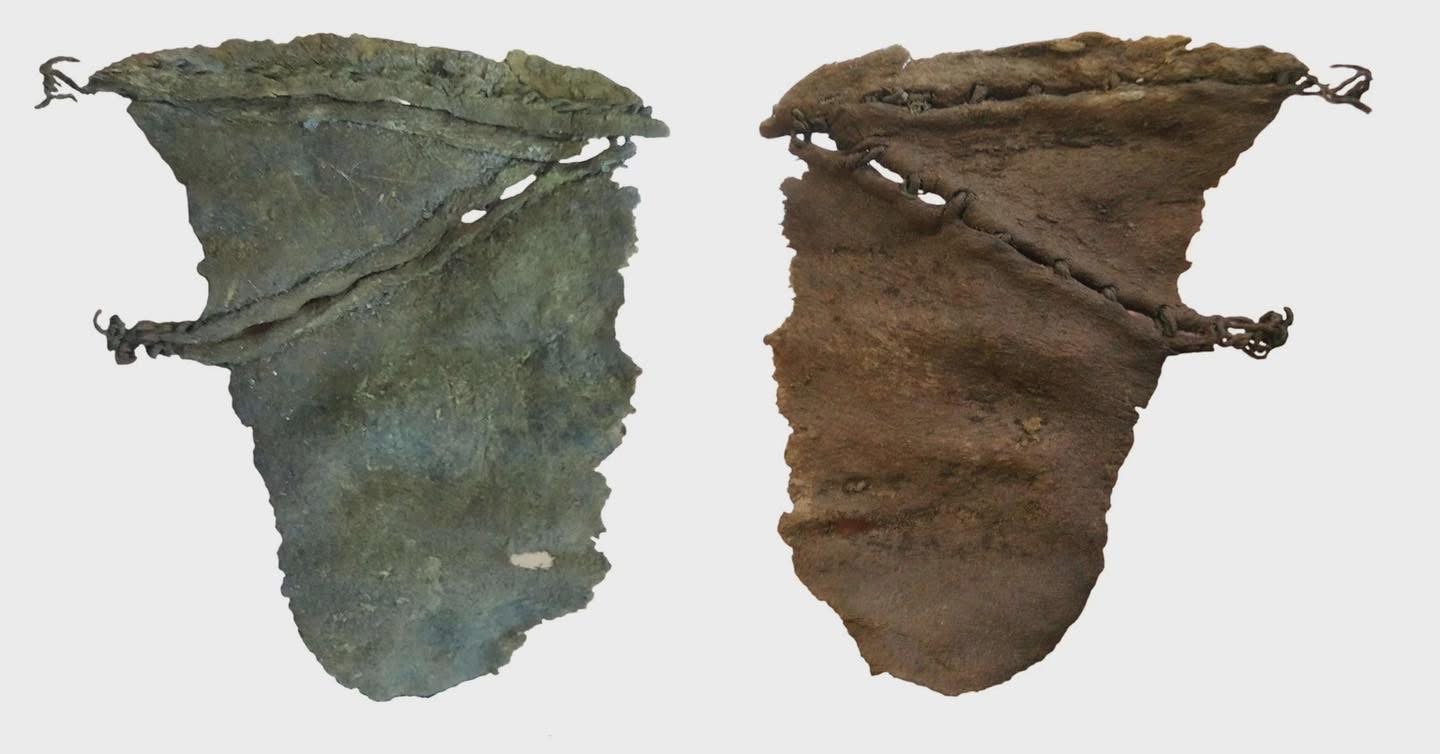
2400 year old Scythian leather made of human skin confirming what was for centuries thought to be an exaggeration from Greek historian Herodotus
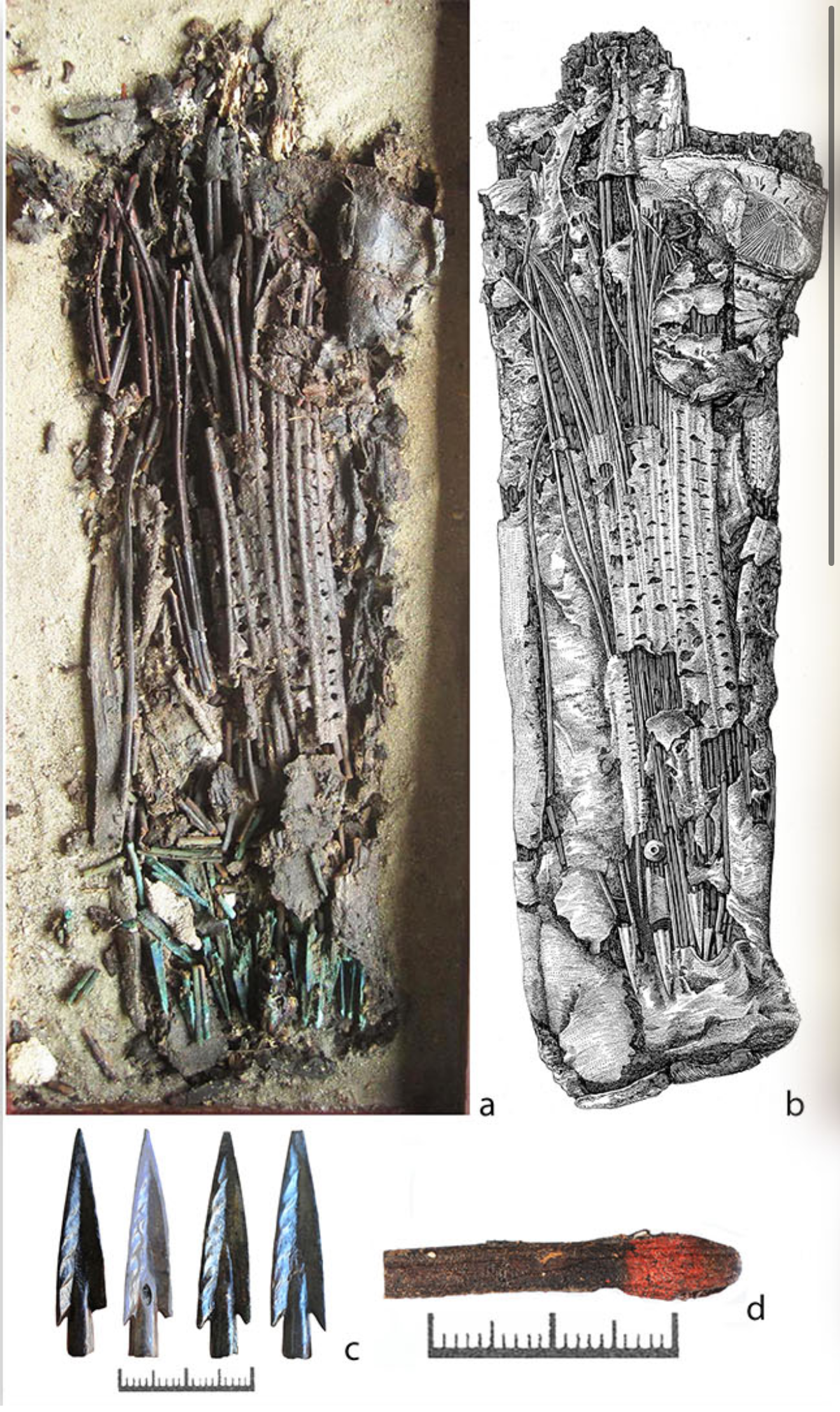
“Herodotus's account in The Histories (Book 4), where he wrote that Scythians "stripped the skin, nails and all, from the right hands of fallen foes" to make coverings for their quivers.”
Further examination of the human skin leather samples revealed that they were selectively used in the top parts of the quivers, while the rest of the quivers were made from animal leather. This suggests a deliberate and purposeful crafting of these quivers, possibly by individual archers using materials readily available at the time.
The ancient Scythians — nomadic warriors and pastoralists who flourished on the steppes of Europe and Asia — turned human skin into leather, a new study finds.
The discovery confirms a claim made by the ancient Greek historian Herodotus that the Scythians (circa 800 B.C. to A.D. 300) used human flesh for leather.
To investigate, researchers analyzed 45 samples of leather from 18 burials from 14 sites in southern Ukraine, according to the study, published Dec. 13 in the journal PLOS One. The leather objects were excavated at different times over the past few decades.
The team found that two leather samples — both of which come from quivers, or containers that held arrows — were made of human skin. Leather from animals — including sheep, goats, cattle and horses — was also used in the construction of the quivers. The quivers were buried in kurgans — mounds that held the burials of rulers or other high-ranking individuals — and date back around 2,400 years to when the Scythians were thriving.
"Considering that quivers were an important element of Scythian warrior identity it is very likely that the quivers ended up being buried with their owners" study co-author Margarita Gleba, an assistant professor of archaeology at the University of Padua in Italy, told Live Science in an email.
The team analyzed the leather by using peptide mass fingerprinting, a technique that examines specific proteins in organic samples to determine which kind of animal it was made from.
Their results revealed that Herodotus (who lived circa 484 to 425 B.C.) was accurate in his written assessment of the Scythians' repurposing of human skin.
Herodotus wrote that a Scythian scrapes out human flesh "with the rib of a steer, and kneads the skin with his hands, and having made it supple he keeps it for a hand towel, fastening it to the bridle of the horse which he himself rides, and taking pride in it; for he who has most scalps for hand towels is judged the best man." (Translation by A.D. Godley, 1920.)
"Many Scythians even make garments to wear out of these scalps, sewing them together like coats of skin. Many too take off the skin, nails and all, from their dead enemies' right hands, and make coverings for their quivers," Herodotus wrote.
"Our results appear to confirm Herodotus' [grisly] claim," the research team wrote in the journal article.
Barry Cunliffe, a professor emeritus of European archaeology at the University of Oxford who was not involved with the research, wondered if there could be other reasons, aside from those mentioned by Herodotus, that could help explain why the Scythians used human leather.
"I wonder if what lies behind it is that in possessing some part of what you are hunting, be it human or animal, you gain extra power over them. The belief being that your arrows are guided to your [prey] by their being kept in proximity to their skin?" Cunliffe told Live Science in an email. "Herodotus also says that the Scythians decorated their horses with the heads of their enemies. Could the thought be that the heads not only displayed your valour but guided you to your [prey]?"
The Scythians were not the only people throughout history to use human leather. For instance, binding books with human leather is a practice that has continued from ancient times to the present day. In 2020, a Live Science investigation into the sale of human remains revealed a 1917 edition of the book "Diseases of the Skin," by Dr. Richard Sutton, that a seller on Facebook claimed to have bound with human skin. The seller, who sold the book for $6,500, claimed that they had obtained the human skin from a "retired medical specimen."